
Self-host Syncthing
v2.1.7Peer-to-peer continuous file synchronization
- Stars
- 90 201
- Ports
- 8384 (Web GUI and REST API), 22000 (Sync protocol (TCP and QUIC/UDP)), 21027 (Local discovery (IPv4 broadcast and IPv6 multicast))
syncthing/syncthing
What is Syncthing?
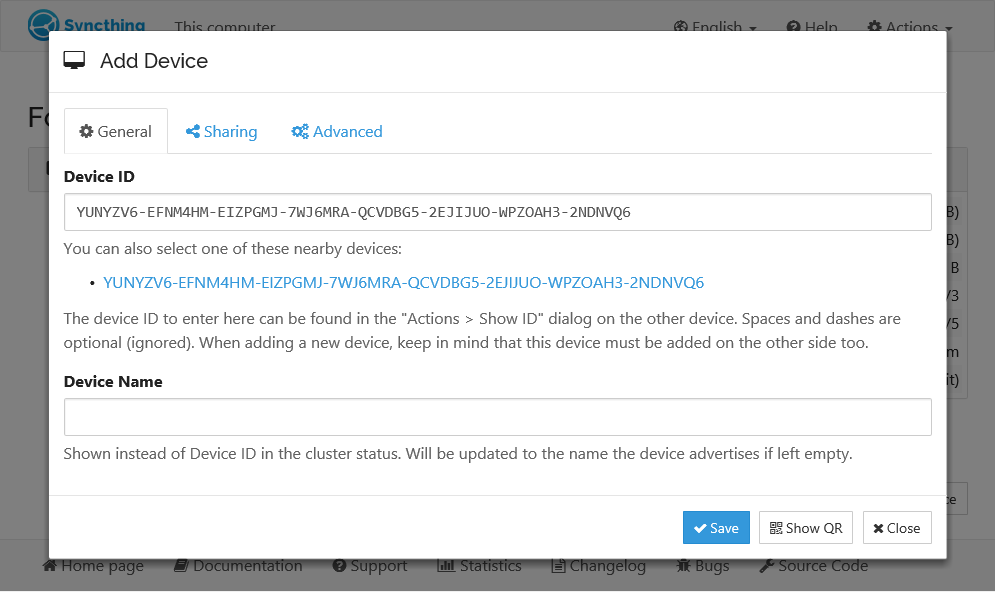
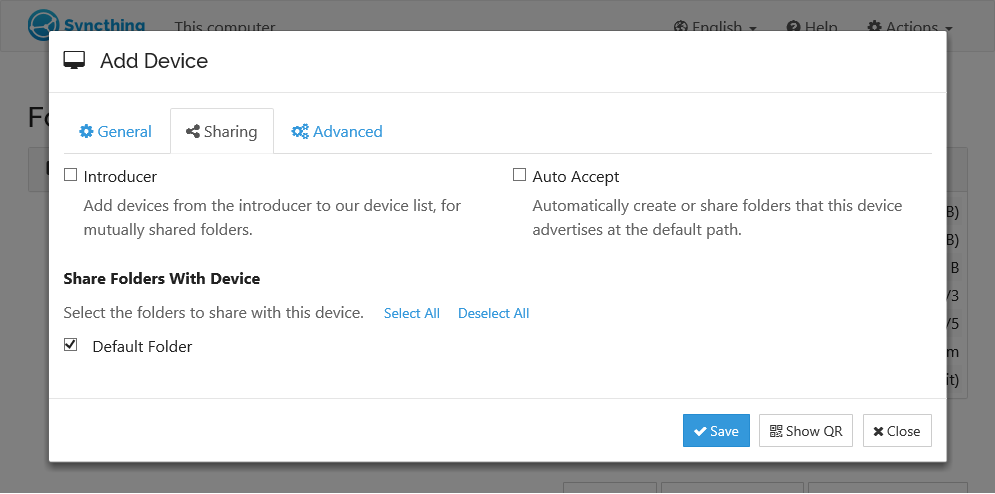
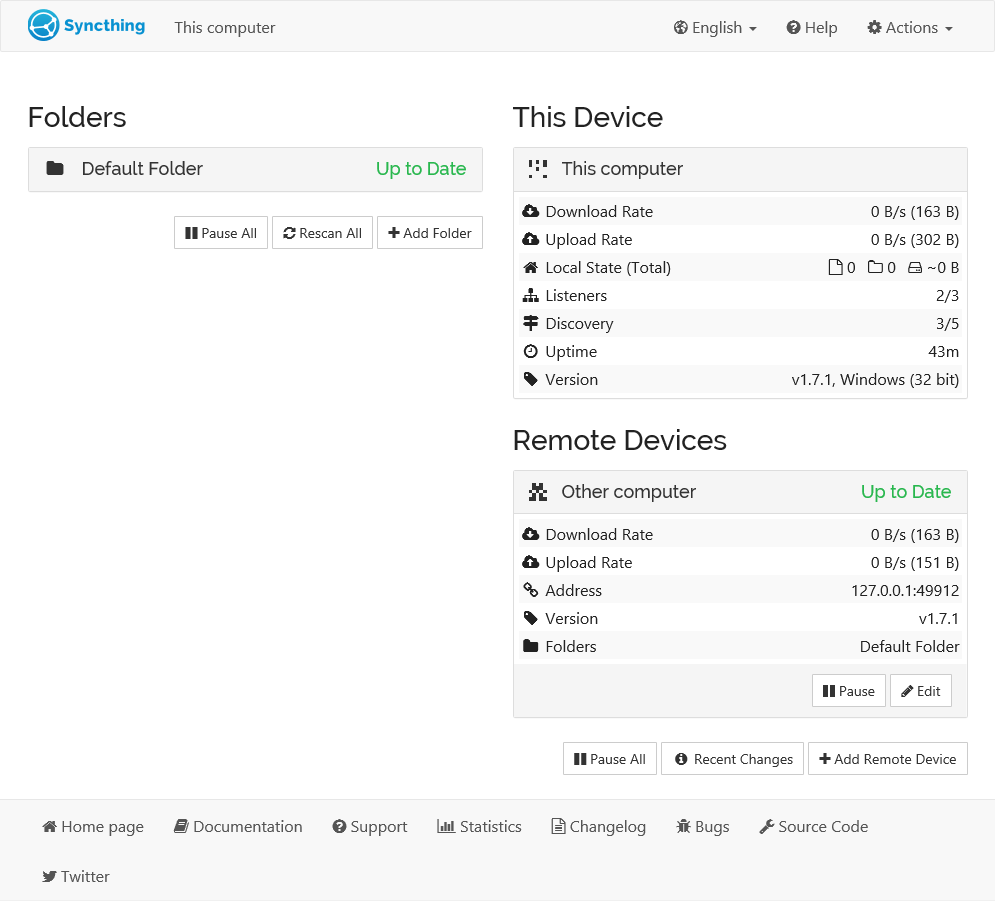
Syncthing keeps files in sync across multiple computers in real time with no central server involved. Your data never leaves your own machines. All traffic is encrypted using TLS with perfect forward secrecy, and every device proves its identity with a strong certificate. A responsive browser-based control panel lets you configure and monitor everything, and it runs on all major desktop and server operating systems. Core capabilities include automatic NAT traversal via UPnP, built-in file versioning, flexible ignore patterns, LDAP/Active Directory authentication for teams, a full REST API, Prometheus metrics export, support for encrypted untrusted nodes, relay servers when direct connections fail, and automatic cryptographically signed upgrades. Deployment options are a standalone Go binary, a Docker image, or native system packages. The code is MPL-2.0 licensed and the project survives on donations.
Syncthing alternatives
 UnisonSelf-hosted, open-source two-way file synchronizer for Linux, BSD, macOS and Windows replicas, with conflict detection, profiles, backups and a continuous watch mode.CompareUnison with Syncthing
 SynchSynch is a self-hosted, open-source alternative to Obsidian Sync that encrypts notes locally before syncing across devices with version history and conflict merging.CompareSynch with Syncthing
 CloudSyncOpen-source self-hosted file sync with desktop client that watches a folder and uploads changes to your own server, like Google Drive's desktop client.CompareCloudSync with Syncthing
 Notesnook Sync ServerNotesnook Sync Server is the open-source, self-hostable backend for end-to-end encrypted note sync. Runs via Docker Compose with MongoDB and S3 storage.CompareNotesnook Sync Server with Syncthing
 VaultSyncVaultSync syncs Obsidian vaults peer-to-peer between iPhone/iPad and a personal server via Syncthing, with optional Cloud Relay for faster background wake-ups.CompareVaultSync with Syncthing
 any-sync-dockercomposeDeploy your own any-sync network with Docker Compose - self-host Anytype backendCompareany-sync-dockercompose with Syncthing
 pingvin-share-xOpen-source self-hosted file sharing platform and WeTransfer alternative with link sharing, expiration, passwords, ClamAV scanning, S3 support, and OIDC/LDAP auth.Comparepingvin-share-x with Syncthing
 AnyTypeSelf-hosted Docker Compose deployment of the any-sync network powering Anytype — run your own encrypted sync backend with MongoDB, Redis, and Garage S3 storage.CompareAnyType with Syncthing
Should you self-host Syncthing?
Syncthing scores 90/100 on selfhost.directory (how scoring works) and ranks #1 of 15 in File Sync. It has 90 201 GitHub stars, +1 079 in the last 30 days.
It shipped 8 stable releases in the past year. The latest, v2.1.7, came out on 21 October 2026. New versions land roughly every 4 weeks.
Setup is easy: most people get it running in one sitting. An official Docker image is available. It is MPL-2.0-licensed and written mostly in Go.
Its closest alternative on selfhost.directory is Unison (65/100, 5 572 stars). Syncthing scores higher overall. See Syncthing vs Unison side by side.
Features
- Automatic NAT traversal
- Automatic upgrades
- Cross-Platform Support
- Device authentication
- End-to-end encryption
- File Versioning
- Ignore patterns
- LDAP Authentication
- Peer-to-peer file synchronization
- Prometheus Metrics
- Relay support
- REST API
- Untrusted (encrypted) devices
- Web-Based GUI
Syncthing README

Syncthing is a continuous file synchronization program. It synchronizes files between two or more computers. We strive to fulfill the goals below. The goals are listed in order of importance, the most important ones first. This is the summary version of the goal list - for more commentary, see the full Goals document.
FAQ
What is Syncthing?
Syncthing is an application that lets you synchronize your files across multiple devices. It replicates file creation, modification, or deletion automatically across your machines without uploading data to the cloud.
More in File Sync
 TurtlOpen-source, self-hosted backend server for Turtl clients: account management, data storage, syncing, sharing permissions and a plugin architecture, on Node and Postgres.
- UnisonSelf-hosted, open-source two-way file synchronizer for Linux, BSD, macOS and Windows replicas, with conflict detection, profiles, backups and a continuous watch mode.
- VaultSyncVaultSync syncs Obsidian vaults peer-to-peer between iPhone/iPad and a personal server via Syncthing, with optional Cloud Relay for faster background wake-ups.
 yet-another-rclone-dashboardSelf-hosted, open-source web UI for managing rclone remotes, browsing files, monitoring transfers, and controlling the rclone RC daemon with dark mode and PWA support.
 zotero-webdav-serverA self-hosted WebDAV server using Caddy and Tailscale that enables file syncing for Zotero desktop and iOS apps without relying on Zotero's paid storage.
 abs-kosync-bridgeBookBridge is a self-hosted, open-source sync engine aligning reading and listening progress across Audiobookshelf, KOReader, Grimmory, BookOrbit. Runs in Docker.
 Alist-SyncAlist-Sync is a self-hosted, open-source web app for syncing files between Alist storage backends with a visual UI, cron scheduling, and configurable difference handling.
 alt-coreAlterante Core is a self-hosted, open-source decentralized filesystem in Java for file discovery, automated backup/replication, and web-based file access.
 alteroaltero is a self-hosted, open-source Zotero sync server implementing the Web API v3 for libraries, groups, notes, attachments, and full-text search.
 any-sync-bundleA self-hosted, open-source sync backend for Anytype that bundles all sync components into one deployable unit with built-in database and cache.
- AnyTypeSelf-hosted Docker Compose deployment of the any-sync network powering Anytype — run your own encrypted sync backend with MongoDB, Redis, and Garage S3 storage.
 armadiettoArmadietto is a self-hosted, open-source RemoteStorage server in Node.js for personal cloud storage with modular (S3-backed) and classic (filesystem) variants.
0 comments