
Self-host october
v4.4.0Laravel-based PHP CMS with plugins, themes and Tailor
docker run -d --name my-october -p 8080:80 -p 3306:3306 -v my_october_files:/var/www/html -v my_october_db:/var/lib/october-mysql octobercms/october:latest- Stars
- 11 159
- Port
- 80 (HTTP served by Apache in the development container (host example maps 8080:80))
octobercms/october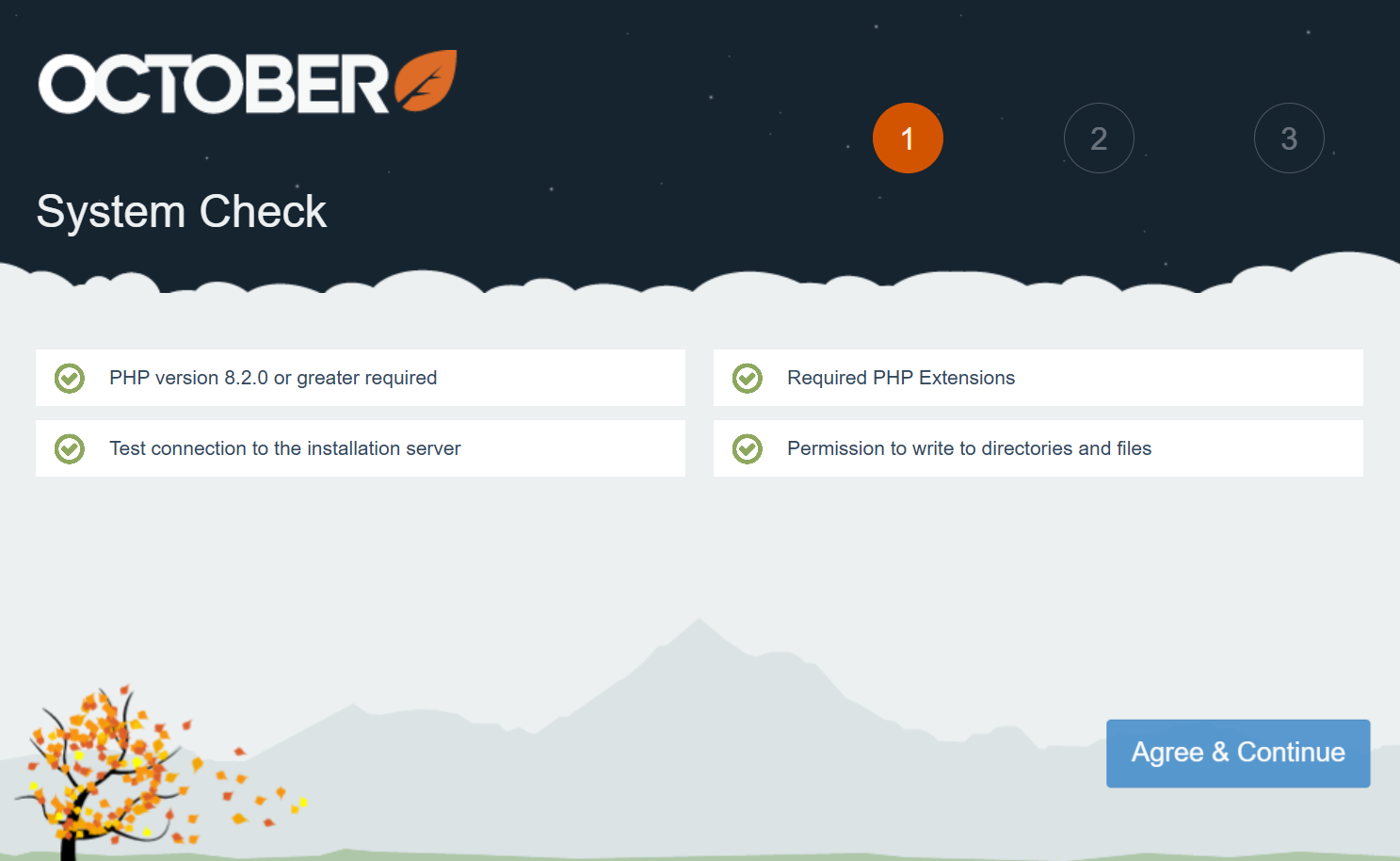

What is october?
October CMS is a content management system and web platform built on the Laravel PHP framework, aimed at developers and the agencies who ship sites for clients. Every page and template lives in its own file, so a whole theme can be kept in Git, while the back end provides a code editor, Twig templating, reusable page components configured through a visual inspector, and an asset combiner that merges and minifies CSS and JavaScript. Tailor, part of the core, turns YAML blueprint files into record types plus their administration screens; from v4.4 it can also accept entries submitted by visitors — comments, form responses, reviews — through a built-in review queue with spam filtering. Additional core pieces include Multisite for serving content in several languages, a media manager with cropping and CDN delivery, a plugin and theme Marketplace with in-panel updates, CSRF protection, and a safe mode that blocks PHP code inside templates. Self-hosting uses an ordinary PHP stack: install through Composer and then run the october:install and october:migrate Artisan commands, use the browser-based wizard archive if you would rather avoid a terminal, or run the prebuilt octobercms/october container for evaluation and DDEV-based development. It works with MySQL 5.7, MariaDB 10.2, PostgreSQL 9.6 or SQLite 3.8.8 behind Apache, Nginx, Lighttpd or Microsoft IIS. Licensing is the unusual part: the code is published on GitHub but covered by an End User License Agreement, so a production site needs a project licence key. Every account includes a free licence for the first year, renewals cost $39 per year for each website, and an agency subscription covers unlimited licences. A lapsed licence does not switch your site off — you simply stop receiving platform updates and Marketplace access.
october alternatives
 VonCMSVonCMS is a self-hosted, open-source CMS for publishers. Runs on PHP/MySQL with no Node.js, offering editorial workflow, bundled themes, built-in SEO, GPL-3.0-only.CompareVonCMS with october
 CockpitCockpit is a self-hosted, open-source headless CMS with GraphQL and REST APIs, flexible content modeling, and multi-language support. Runs on PHP with SQLite or MongoDB.CompareCockpit with october
 Joomla!Self-hosted, open-source CMS for building multilingual, SEO-ready business and community websites on PHP with MySQL, MariaDB or PostgreSQL.CompareJoomla! with october
 TextpatternSelf-hosted, open-source PHP/MySQL CMS with a tag-based template language, themes, plugins, multi-site support, and an admin panel in 50+ languages.CompareTextpattern with october
 TYPO3 CMSSelf-hosted, open-source PHP CMS for enterprise sites: multisite and multilingual content, versioning, granular permissions, extensions, Composer install.CompareTYPO3 CMS with october
 ContaoSelf-hosted open-source CMS on Symfony for accessible websites, with multi-site support, fine-grained permissions and news, calendar and newsletter modules.CompareContao with october
 MicroweberSelf-hosted drag-and-drop website builder and CMS based on Laravel with built-in e-commerce, blog, and content management features.CompareMicroweber with october
 cmsA self-hosted flat-file content management system built on Laravel, installed with Composer or Laravel Sail, with live preview, blueprints and headless APIs.Comparecms with october
Should you self-host october?
october scores 64/100 on selfhost.directory (how scoring works) and ranks #12 of 43 in Content Management. It has 11 159 GitHub stars, +14 in the last 30 days.
It shipped 2 stable releases in the past year. The latest, v4.4.0, came out on 30 August 2026. New versions land roughly every 3 months.
Setup is moderate: expect some configuration beyond a single command. An official Docker image is available. It is Other-licensed and written mostly in PHP.
Its closest alternative on selfhost.directory is Ghost (84/100, 55 816 stars). It scores higher overall, so compare the two before you pick. See october vs Ghost side by side.
Features
- Asset combining and minification
- Back-end admin panel
- Built-in code editor
- Built-in software updatesUpdate access needs an active project licence (first year free, then $39/year).
- Content type builder (Tailor)
- CSRF protection
- File-based themes
- Media manager with image cropping and CDN support
- Multisite / multilingual content
- Plugin and theme marketplaceRequires an active project licence.
- Plugin System
- Safe mode for template code
- Twig template engine
- User-submitted content
- Visual content editing
october README

October is a Content Management System (CMS) and web platform whose sole purpose is to make your development workflow simple again. It was born out of frustration with existing systems. We feel building websites has become a convoluted and confusing process that leaves developers unsatisfied. We want to turn you around to the simpler side and get back to basics.
FAQ
What about Test and Development environments?
One project licence covers the live site together with its development and test environments.
Can a Website have different domains?
Yes, as long as it still presents itself as the same site, for example the same organisation name and branding.
How do you define a Website?
By its identity — name, branding and audience — rather than by the installation, so one production site plus its development and staging copies count as a single Website.
Can I use the same Project License for all my websites?
No, each website needs its own licence so that every project has its own updates and support.
If I opt not to renew the Project License, can I still use my website?
Yes — the licence is perpetual and the site keeps running; only access to the Update Gateway is lost.
Is support included with my license?
Help with the platform itself is free for every licence holder; hands-on help with your own website or custom code is a paid premium service.
What else does a Project License give me?
Access to the Marketplace ecosystem and the community forum, plus support over email, GitHub and Discord at no extra charge.
Can I try October CMS before committing?
Every new account gets a complimentary first-year licence with full access, and you can also request an online demo or install the free Development Docker Image locally.
Is October CMS open source?
The source code is published on GitHub and is not compiled or encrypted, but a project licence is needed to run it in production, which unlocks the Update Gateway, the Marketplace and community support.
More in Website Builder
 QloAppsSelf-hosted, open-source hotel PMS with a direct booking engine and responsive hotel website for multi-property, multilingual hotels.
 silexSelf-hosted, open-source visual website builder (AGPL) that exports clean HTML/CSS, plugs into headless CMSs, and runs via Docker, Node.js, CapRover or a desktop app.
 smartsites-editor-platformSelf-hosted open-source website builder with drag-and-drop CMS and visitor analytics, built on Django and React.
- TYPO3 CMSSelf-hosted, open-source PHP CMS for enterprise sites: multisite and multilingual content, versioning, granular permissions, extensions, Composer install.
 Vvveb CMSSelf-hosted open-source PHP CMS with a visual drag-and-drop builder, multi-site and multi-language support, headless GraphQL/REST APIs and built-in ecommerce.
 webinyAn open-source, self-hosted headless CMS that runs serverless in your own AWS account, with a GraphQL API, drag-and-drop page builder, file manager and multi-tenancy.
 webstudioOpen-source visual website builder pitched as an alternative to Webflow: every CSS property, design tokens, headless CMS data, and self-hosted export of built sites.
 YcodeYcode is a self-hosted, open-source visual website builder and CMS with AI-assisted editing via MCP. Runs on Vercel with Supabase, free tier has unlimited pages and CMS.
 ApostropheA full-featured, open-source content management framework built with Node.js that empowers organizations by combining in-context editing and headless architecture in a full-stack JS environment.
 btwA self-hosted, open-source personal website builder for blogs and notes, pitched as a Medium alternative, run with Docker Compose and PostgreSQL.
 courselitA self-hosted LMS and course platform: open-source tooling to author lessons, sell digital downloads, run communities and publish blogs via a no-code builder.
 EmDashSelf-hosted open-source Astro CMS that runs on Node.js or Cloudflare, with a passkey admin, sandboxed plugins, REST API and a built-in MCP server.
0 comments