
Self-host Meshery
v1.0.75Cloud native manager for Kubernetes fleets
- Stars
- 12 154
- Port
- 8080 (Meshery Server HTTP listen port (PORT default 8080); local/Docker setups map it to host port 9081 for the UI at http://localhost:9081)
meshery/meshery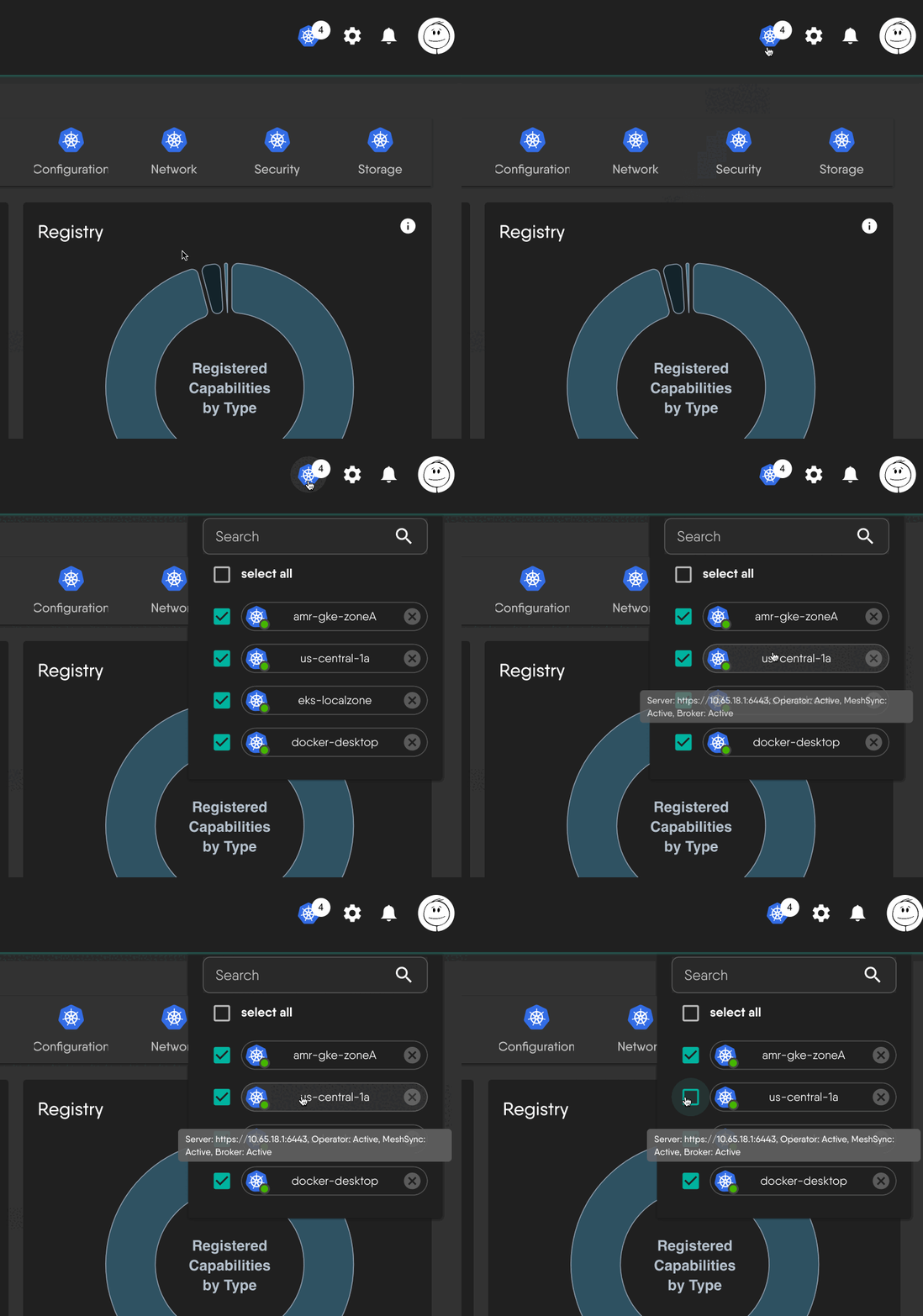
What is Meshery?
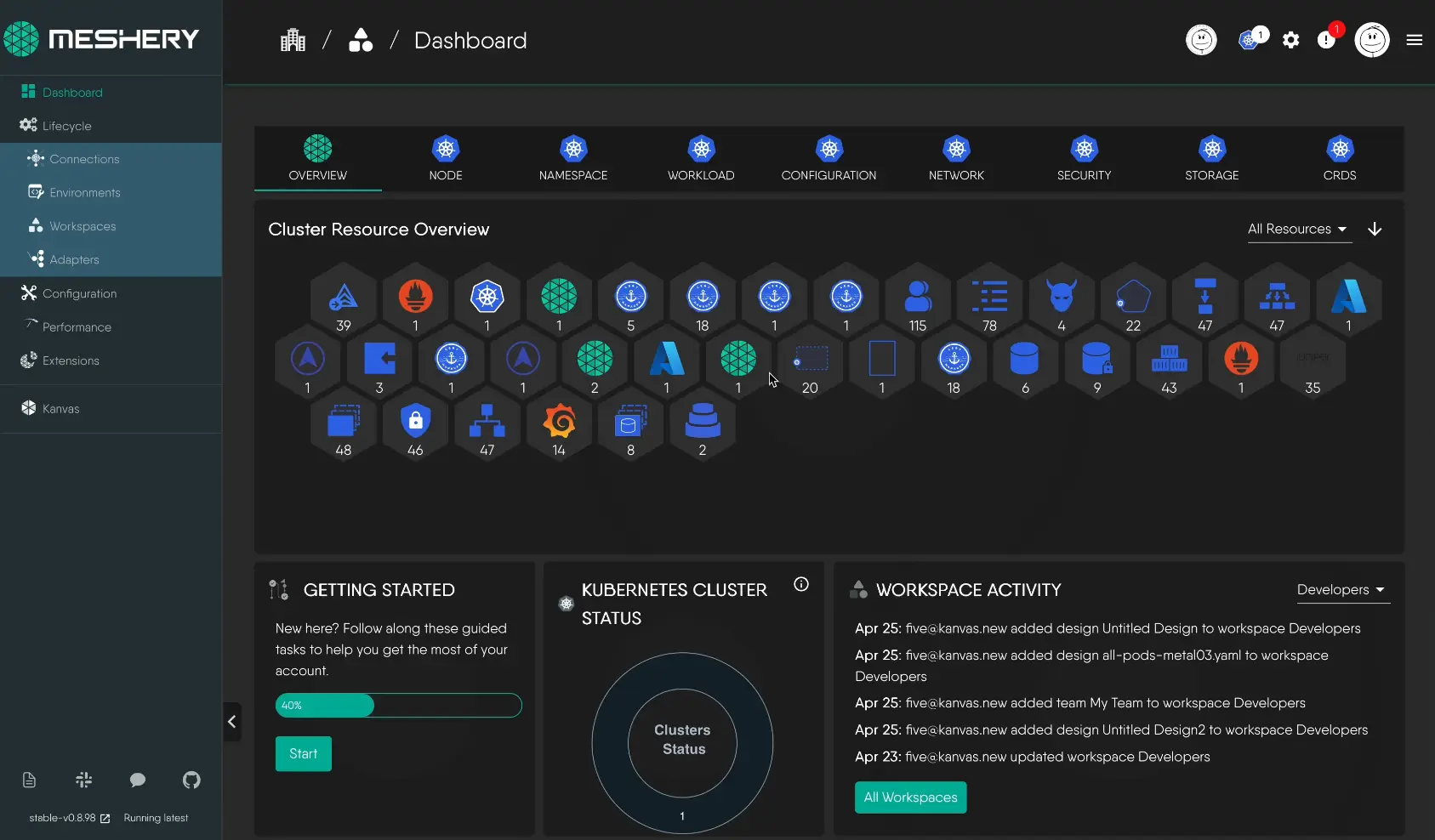
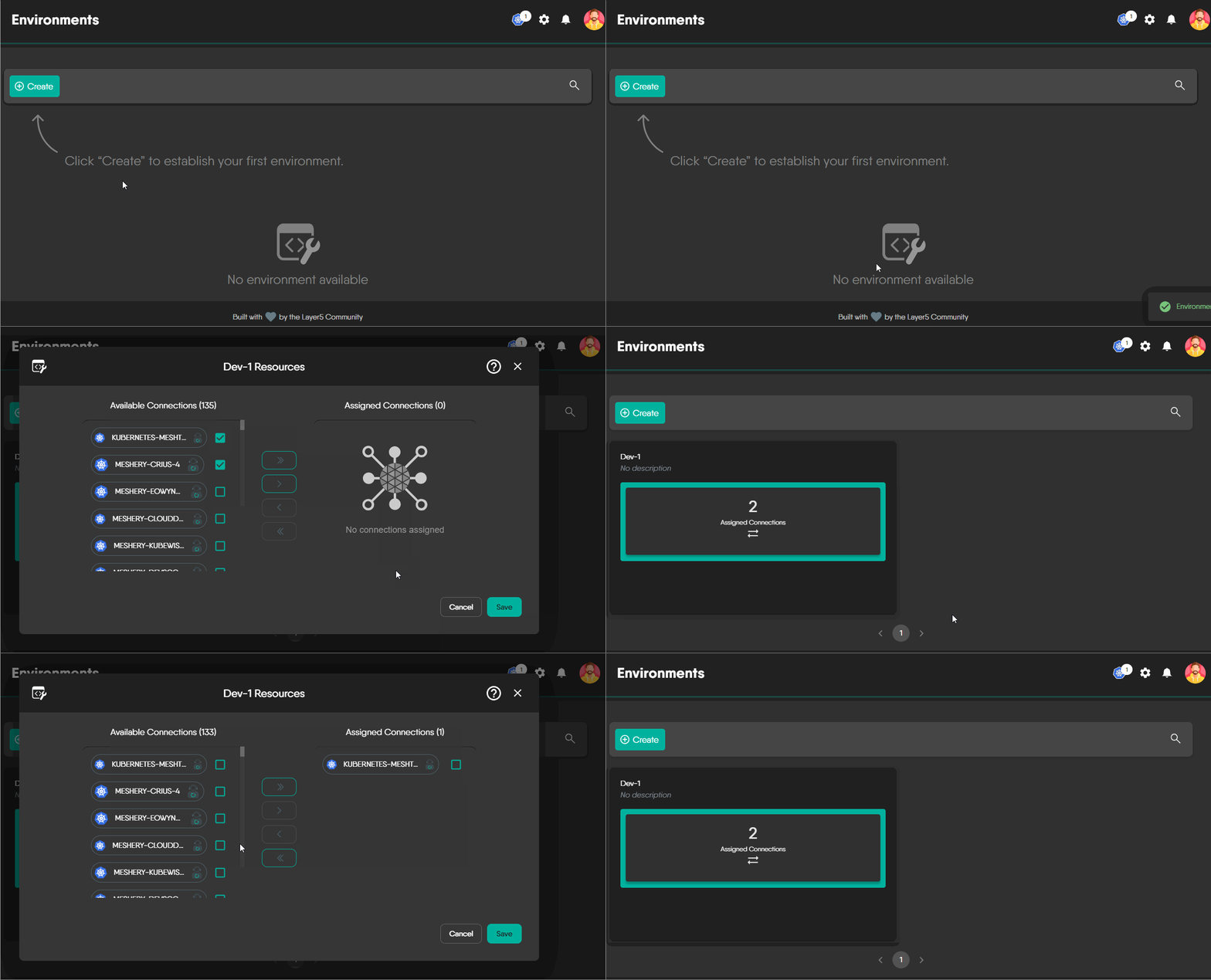
Meshery is a CNCF cloud native manager that gives teams a single, relationship-aware model for Kubernetes and non-Kubernetes infrastructure across clouds. It manages clusters and cloud services through visual, collaborative GitOps instead of hand-written YAML, supports multi-cluster and multi-cloud connections, imports Helm and Kustomize assets, and starts designs from a catalog of curated patterns. A policy engine evaluates every design as it is created or imported, encoding component relationships so changes are validated before rollout, and deployments can be dry-run against the cluster first. Teams work in shared workspaces with environments, credentials, granular role-based access controls, and infrastructure snapshots shown inside GitHub pull requests. On the operations side it discovers live state via MeshSync, gathers cluster and workload metrics from Prometheus servers and Grafana dashboards, and runs load generation and performance profiling with Fortio and reusable performance profiles. Meshery is written in Go with a React UI and exposes REST and GraphQL APIs plus gRPC adapters, hot-loadable React packages and Go plugins, and an MCP server that lets AI agents read models and propose reviewed changes. Self-hosting runs the mesheryctl CLI over Docker, Docker Compose, or Helm on Kubernetes, and multi-user production use expects a Remote Provider that handles OAuth/OIDC login and durable user state. A public browser playground is offered for trying it without installing.
Meshery alternatives
 Chaos MeshSelf-hosted, open-source chaos engineering platform for Kubernetes: inject pod, network, I/O and JVM faults via custom resources and orchestrate fault scenarios.CompareChaos Mesh with Meshery
 RancherSelf-hosted, open-source platform to provision, manage and secure many Kubernetes clusters from one plane, with centralized auth, RBAC and Docker or Helm installs.CompareRancher with Meshery
 kubetailSelf-hosted, open-source Kubernetes logging tool that tails multiple pod logs in real-time via CLI or web dashboard, using your cluster's API directly.Comparekubetail with Meshery
 rocketplaneIOSelf-hosted AI SRE for Kubernetes: eBPF zero-instrumentation traces, logs, metrics, live service map, plus MCP for AI agents to safely remediate.ComparerocketplaneIO with Meshery
 RadarSelf-hosted open-source Kubernetes UI running as a single binary. Provides topology views, GitOps integration, audit checks, and MCP server for AI agent support.CompareRadar with Meshery
 uncloudSelf-hosted, open-source Docker clustering tool: WireGuard mesh, Compose deploys, automatic HTTPS — an alternative to Kubernetes and Swarm.Compareuncloud with Meshery
 apl-coreApp Platform for Linode Kubernetes EngineCompareapl-core with Meshery
 consoleOpen-source self-hosted Kubernetes dashboard with AI-guided missions for 250+ CNCF projects, real-time monitoring, and GPU management.Compareconsole with Meshery
Should you self-host Meshery?
Meshery scores 73/100 on selfhost.directory (how scoring works) and ranks #2 of 7 in Kubernetes. It has 12 154 GitHub stars, +133 in the last 30 days.
It shipped 13 stable releases in the past year. The latest, v1.0.75, came out on 3 November 2026. New versions land roughly every 9 days.
Setup is moderate: expect some configuration beyond a single command. An official Docker image is available. It is Apache-2.0-licensed and written mostly in Go.
Its closest alternative on selfhost.directory is Rancher (76/100, 26 047 stars). It scores higher overall, so compare the two before you pick. See Meshery vs Rancher side by side.
Features
- Command Line Interface
- Deployment dry-run
- Design catalog of reusable patterns
- Infrastructure snapshots in pull requests
- Live infrastructure discovery
- MCP server for AI agents
- Metrics and dashboard visualization
- Multi-cluster and multi-cloud management
- Multi-tenant role-based access control
- Performance testing and profiling
- Relationship-aware policy enforcement
- REST and GraphQL APIs
- Visual GitOps design editor
- Web-based UI
- Workspaces for team collaboration
Meshery README

If you like Meshery, please ★ this repository to show your support! 🤩
More in Kubernetes
 mirrordOpen-source, self-hosted Kubernetes dev tool: your local process or AI agent runs on your machine while mirrord proxies a target pod's traffic, env vars, DNS and files.
- NirvatiSelf-hosted Rust backend for the n5i/Nirvati Kubernetes server-management stack: GraphQL API, node and app agents, plugins; this fork adds Tailscale and Longhorn.
 oneOpenNebula is a self-hosted, open-source cloud platform for private clouds, edge, and AI factories with unified VM, Kubernetes, and GPU management.
 platformSelf-hosted, open-source platform for running AI agents on your own Kubernetes with per-agent isolation and full audit trails.
 PortainerSelf-hosted open-source console for managing container estates: Docker hosts, Swarm clusters, Podman, Kubernetes and Azure ACI, all from one server container.
 production-stackSelf-hosted, open-source Helm stack that scales vLLM across a Kubernetes cluster, with KV-cache-aware request routing and a Prometheus/Grafana monitoring dashboard.
 prometheusPrometheus is a self-hosted, open-source monitoring toolkit that pulls metrics via HTTP, stores them locally, and uses PromQL for powerful queries and alerting.
 Proxmox Kubernetes EngineSelf-hosted tool to deploy HA Kubernetes clusters on Proxmox VE using Cluster API with native storage, load balancing, and CNI.
 rackOpen-source, self-hosted PaaS that runs your apps on a Kubernetes cluster inside your cloud account, adding autoscaling, instant rollbacks, and a Heroku-like CLI.
- RadarSelf-hosted open-source Kubernetes UI running as a single binary. Provides topology views, GitOps integration, audit checks, and MCP server for AI agent support.
- RancherSelf-hosted, open-source platform to provision, manage and secure many Kubernetes clusters from one plane, with centralized auth, RBAC and Docker or Helm installs.
- rocketplaneIOSelf-hosted AI SRE for Kubernetes: eBPF zero-instrumentation traces, logs, metrics, live service map, plus MCP for AI agents to safely remediate.
0 comments