
Self-host evcc
0.319.0PV surplus EV charging controller with home energy smarts
sudo docker run -d --name evcc -p 7070:7070 -p 8887:8887 -v /home/user/.evcc:/root/.evcc -v /home/user/evcc.yaml:/etc/evcc.yaml --restart unless-stopped evcc/evcc:latest- Stars
- 7 609
- Ports
- 7070 (Web UI and API), 8887 (OCPP server), 9522 (SMA Sunny Home Manager (udp)), 7090 (KEBA chargers (udp)), 4712 (EEBUS)
evcc/evcc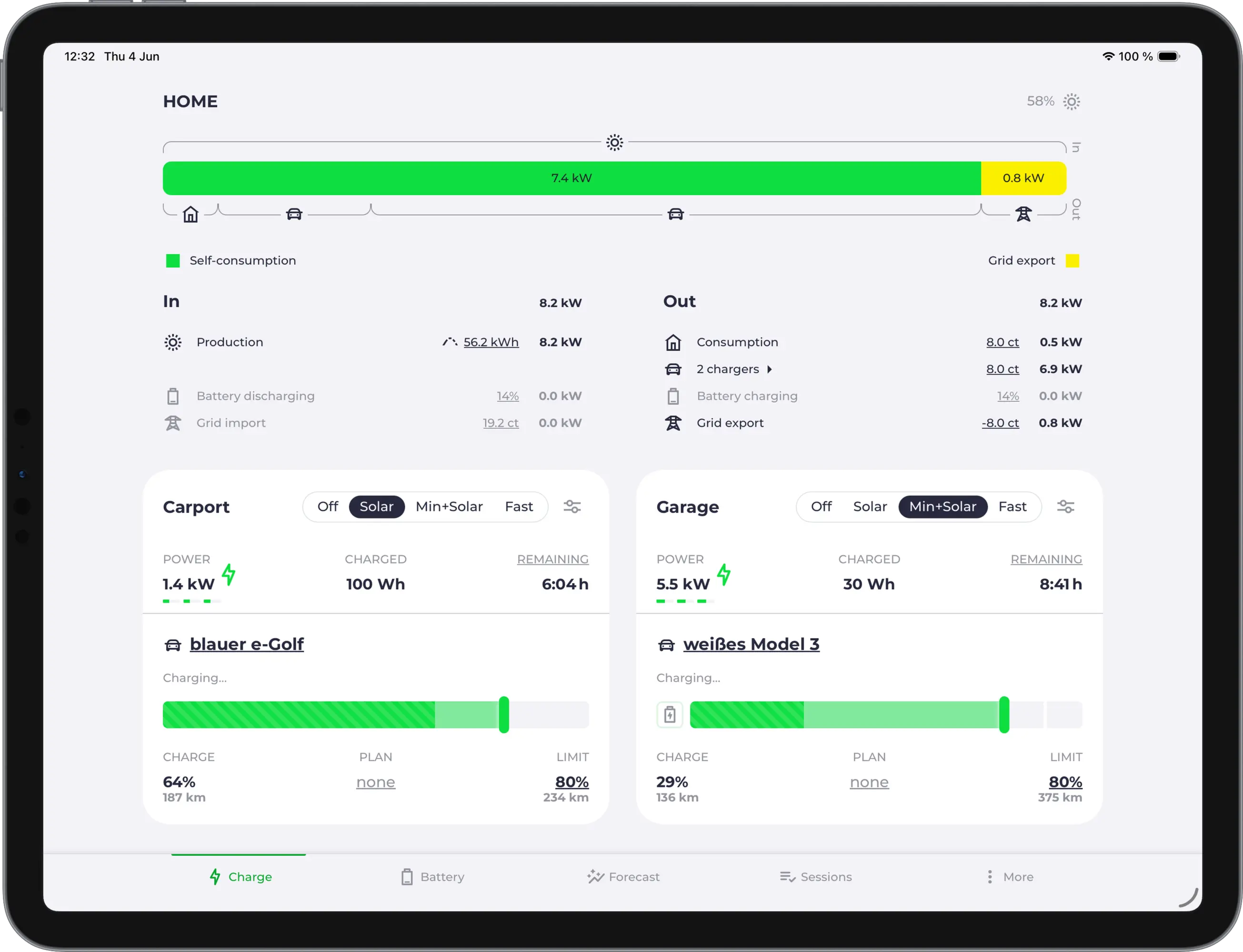

What is evcc?
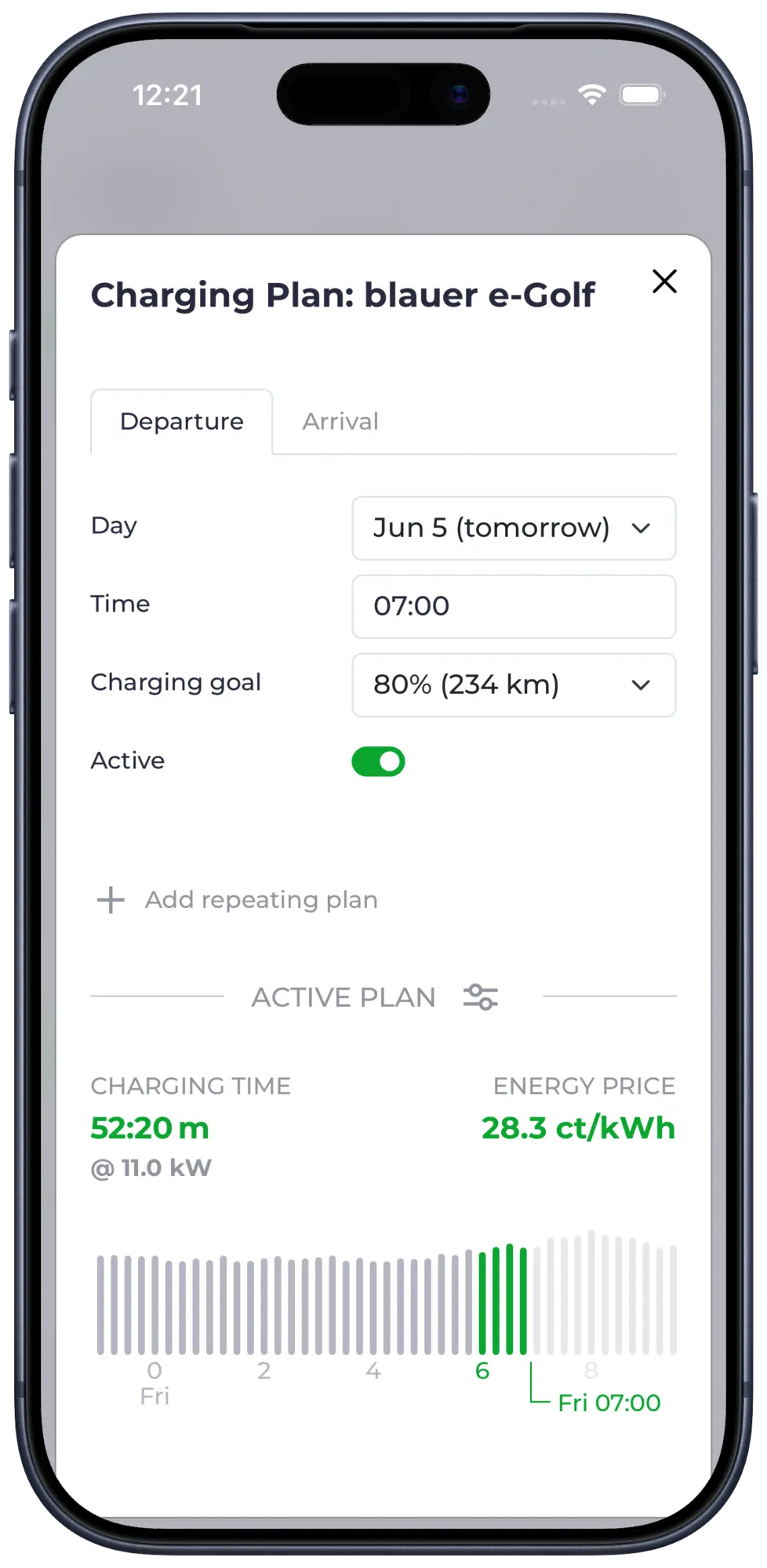
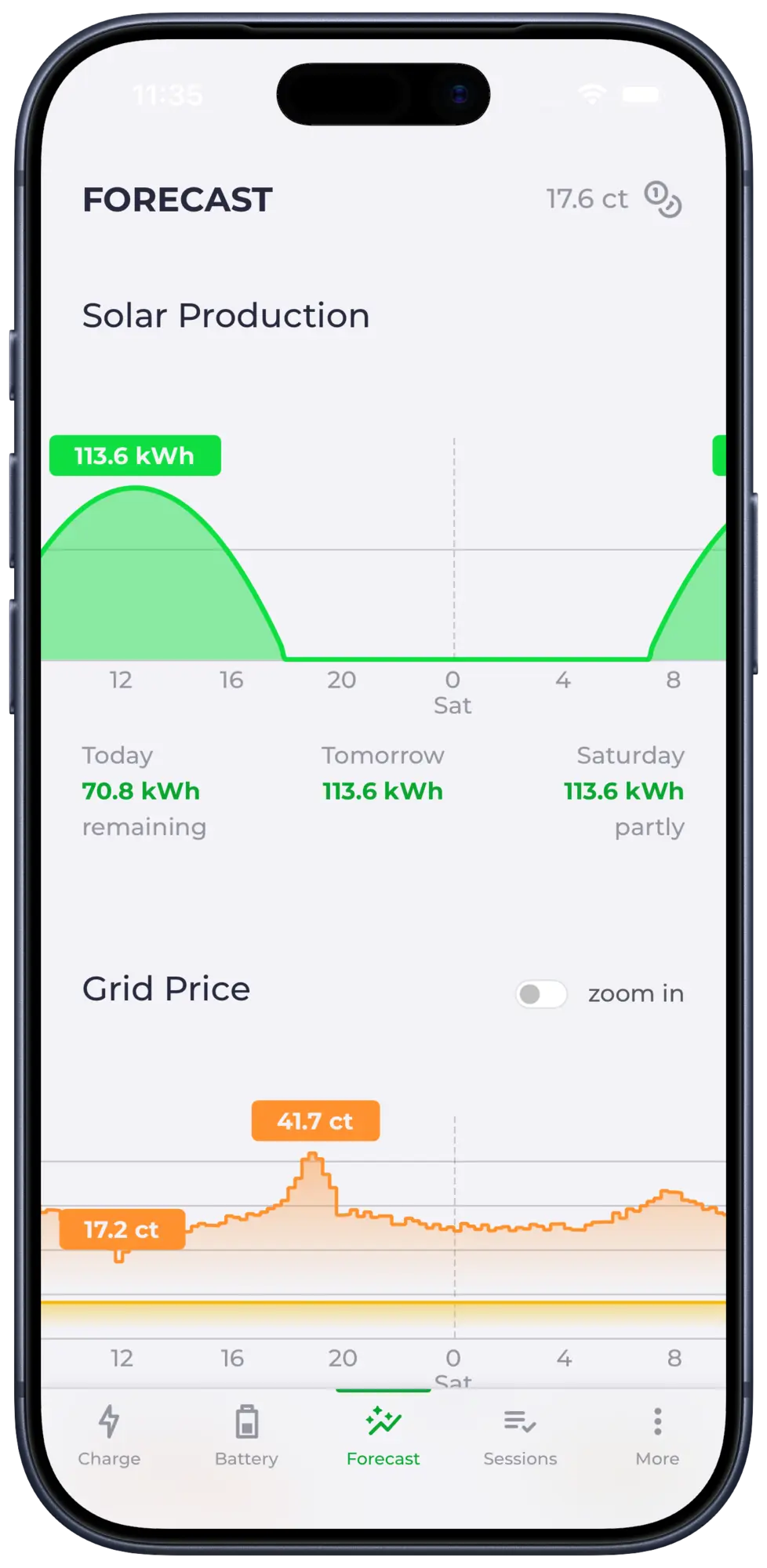
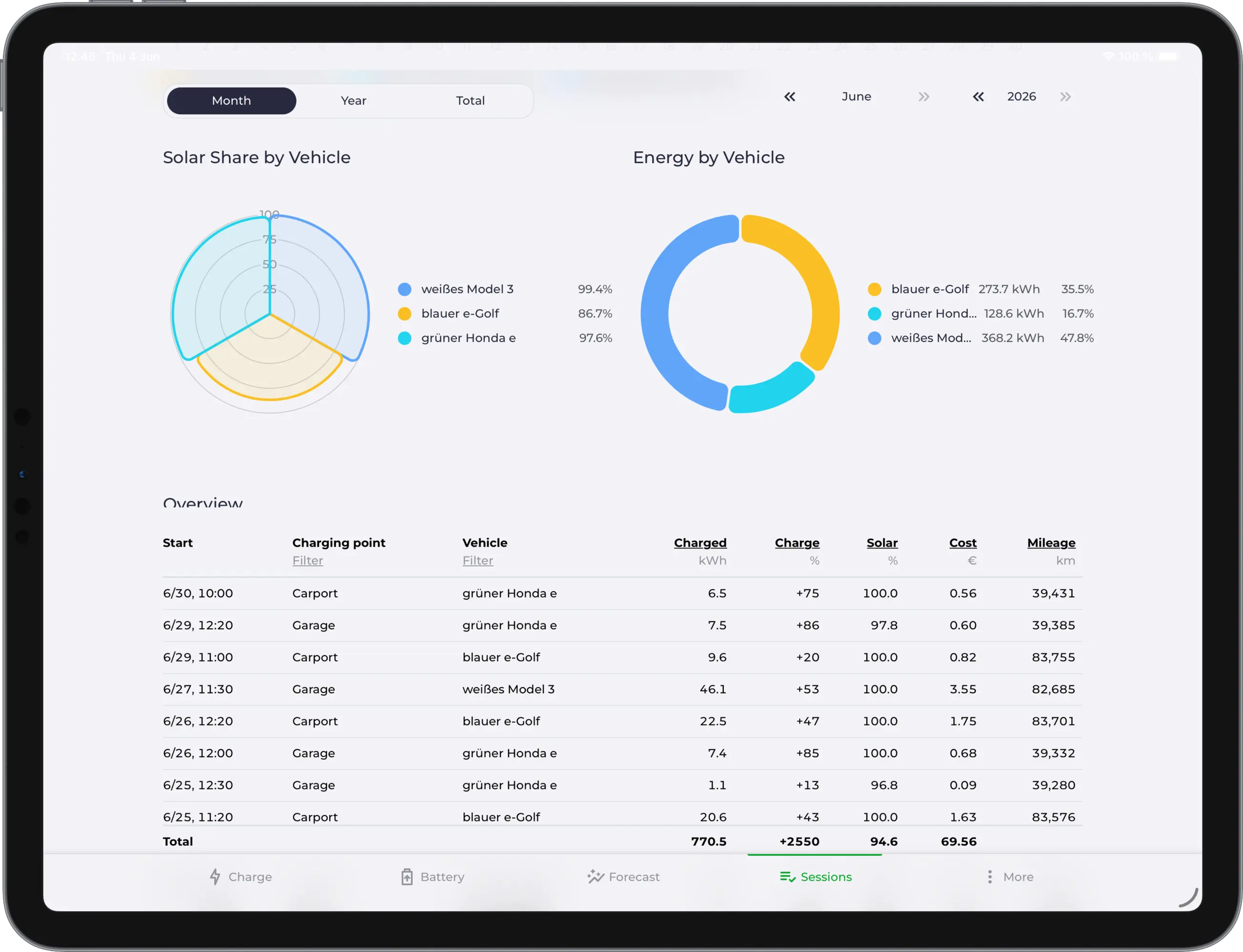
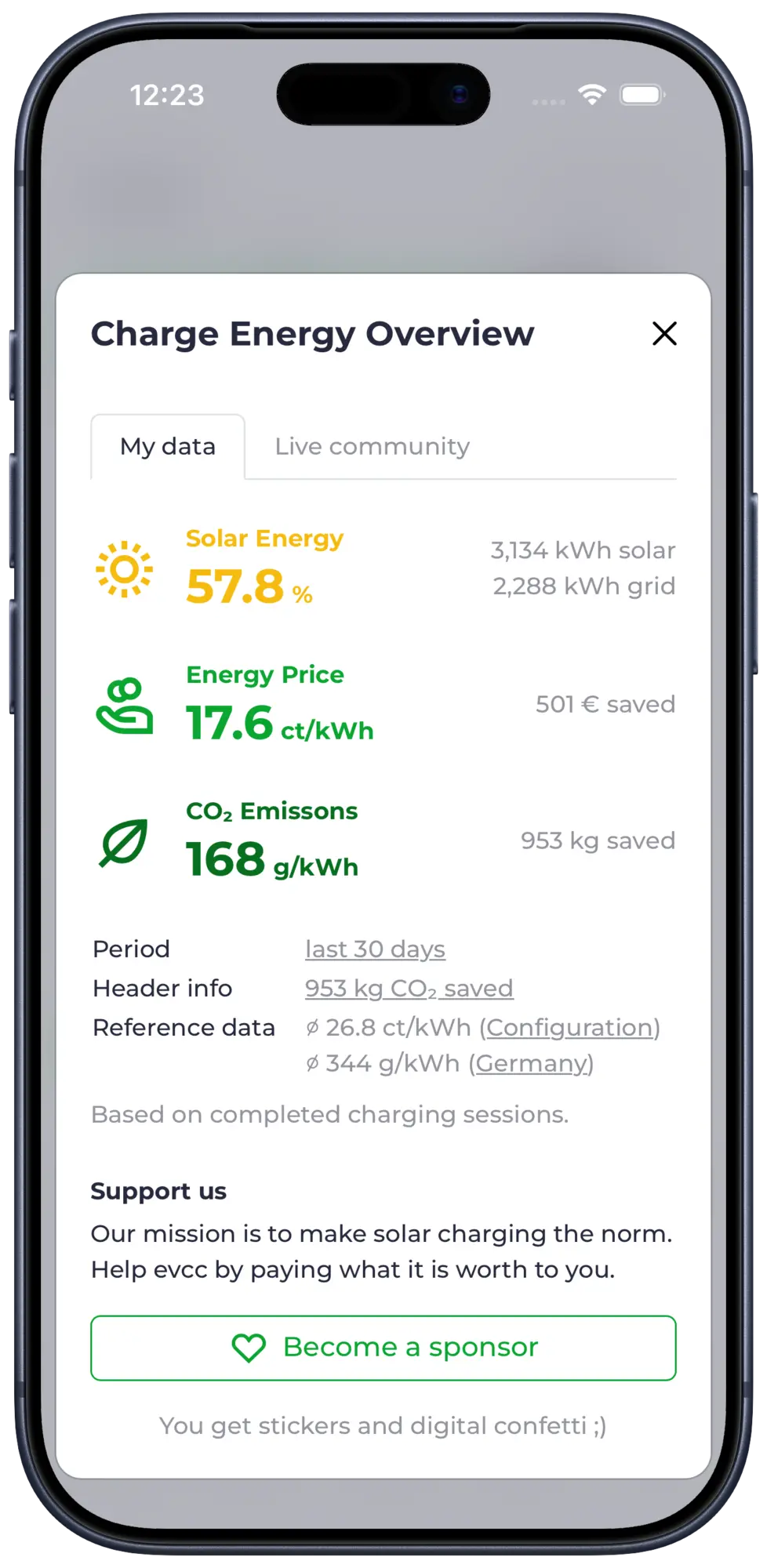
evcc is an extensible controller for EV charging plus household energy management that keeps all decisions on your own hardware instead of a vendor cloud. It polls grid feed-in, solar output, house consumption, home storage and vehicle state, then drives the wallbox so the car loads from PV surplus, from the cheapest spot-price hours, or in time for a departure deadline set in a charging plan. Home batteries can be coordinated with a buffer and priority state of charge plus a battery boost, heat pumps and heating elements can be moved into sunny or cheap windows, several charging points share the house connection via load management, and grid-operator export limiting (§14a / §9) is handled automatically. A tidy, responsive web UI is the primary configuration surface and writes settings into a local database, while the traditional evcc.yaml file is still supported; REST and MQTT APIs expose state and control for home-automation systems, and script-based plugin layers cover the register protocol, plain HTTP, WebSocket, JavaScript, Go and shell commands so you can wire up devices that have no built-in driver. Self-hosting options include a Docker image with Compose or CLI, an APT repository for Debian/Ubuntu, plain Linux tarballs, a Raspberry Pi SD-card image, and guides for Home Assistant, Proxmox, macOS, FreeBSD and Windows; the UI listens on port 7070 by default. The code carries the MIT licence, but drivers for some commercial chargers and extras such as remote access require a sponsor token per instance (GitHub Sponsors or direct payment), and the iOS/Android companion app lives in a separate repository.
evcc alternatives
 solarflow-controlSelf-hosted tool to control Zendure Solarflow hubs and micro-inverters via MQTT, matching home power demand for optimal charging and zero feed-in.Comparesolarflow-control with evcc
 SOLECTRUSSelf-hosted open-source solar dashboard tracking PV production, consumption, battery, and grid exchange with cost calculations. Runs via Docker with HELIOS management.CompareSOLECTRUS with evcc
 Hass-MCPA self-hosted Model Context Protocol server that lets AI assistants like Claude query and control Home Assistant entities, automations, and dashboards.CompareHass-MCP with evcc
 Anker SolixSelf-hosted Home Assistant integration for monitoring and controlling Anker Solix solar batteries, inverters, and power stations via cloud API and MQTT.CompareAnker Solix with evcc
 TasmotaOpen-source firmware that turns ESP8266/ESP32 plugs, bulbs and sensors into self-hosted devices with MQTT, HTTP, web UI, timers and on-device rules.CompareTasmota with evcc
 curb-localSelf-hosted replacement for Curb Energy Monitor cloud service, running on the device hardware for local dashboard, MQTT to Home Assistant, calibration, and energy stats.Comparecurb-local with evcc
 WebThings GatewayAn open-source, self-hosted Web of Things smart home hub: control Zigbee and Z-Wave devices from one web UI, automate with drag-and-drop rules, and chart sensor logs.CompareWebThings Gateway with evcc
 Spotlight_StorageSelf-hosted inventory management system that uses WLED-controlled LEDs to physically locate items in storage bins across multiple locations.CompareSpotlight_Storage with evcc
Should you self-host evcc?
evcc scores 75/100 on selfhost.directory (how scoring works) and ranks #6 of 104 in Home Automation. It has 7 609 GitHub stars, +271 in the last 30 days.
It shipped 43 stable releases in the past year. The latest, 0.319.0, came out on 8 November 2026. New versions land roughly every 4 days.
Setup is easy: most people get it running in one sitting. An official Docker image is available. It is MIT-licensed and written mostly in Go.
Its closest alternative on selfhost.directory is Home Assistant (92/100, 92 279 stars). It scores higher overall, so compare the two before you pick. See evcc vs Home Assistant side by side.
Features
- Charging plans and forecasts
- Dynamic electricity tariffs
- Extensible device plugins
- Grid operator curtailment (§14a / §9)
- Heat pump and heater control
- Home battery coordination
- Load management
- MQTT API
- Remote AccessSponsor token required.
- REST API
- Solar surplus charging
- Status notifications


FAQ
How can I backup and restore my configuration?
The web interface offers a backup function; manually, copying evcc.yaml (usually /etc/evcc.yaml) and the database file (usually /var/lib/evcc/evcc.db) is enough.
Does evcc control charging and discharging of my home battery?
Normally the battery system decides; evcc uses its readings for control and can request specific modes on systems that support active battery control, but it does not continuously regulate battery power.
Can I use multiple chargers?
Multiple chargers can be added and controlled at the same time, but load management across them was stated as not supported yet and in development.
Can I use evcc without integrating the solar inverter?
Yes - with a grid meter and a controllable charger all essential functions, including solar surplus charging, work; you only lose some visualisations and the solar-share statistics.
Can I try out evcc without all the components (solar system, charger, …)?
Yes, evcc ships demo meters and demo chargers you can configure to explore the UI and behaviour.
I don't have solar panels, can I still use evcc effectively?
Yes, for example to charge according to a dynamic electricity tariff, to start/stop a charger remotely, or to cap the charge level - but those use cases all require a grid connection meter.
Can I use evcc without a grid meter?
The grid meter is described as the core of evcc; without it you can only charge based on current solar production, not true surplus, and residualPower can be used to reserve power for the house.
Should I configure evcc via the web interface or with the configuration file?
The web interface is recommended: settings are saved automatically in the database. The traditional evcc.yaml file is still supported and both can be used side by side, though some newer features are UI-only.
More in Home Automation
 FenrusFenrus is a self-hosted, open-source personal home page and dashboard for quick access to your apps and sites with customizable groups and smart integrations.
- FHEMFHEM is a GPL-licensed Perl server for home automation, enabling users to automate tasks like switching lamps, shutters, and heating, as well as logging events such as temperature and humidity.
 FlexTVFlexTV is a self-hosted open-source bridge between Plex Media Server and Google Assistant, Alexa, and Chromecast for voice control.
 FluiddOpen-source, self-hosted Klipper web UI for 3D printers: customizable dashboards, dark themes, G-code viewer, webcams, print history; runs via Docker or KIAUH.
 FrigateFrigate NVR is a self-hosted, open-source NVR with real-time local AI object detection for IP cameras, featuring Home Assistant integration and AI accelerator support.
 frigate-event-bufferFrigate Event Buffer is a self-hosted, open-source companion for Frigate NVR that creates cinematic highlight reels and sends tiered notifications to Home Assistant.
 frigate_plate_recognizerSelf-hosted Docker service that identifies license plates from Frigate events using Plate Recognizer or CodeProject.AI and publishes results via MQTT.
 FruitNannySelf-hosted Raspberry Pi baby monitor streaming live video/audio via WebRTC to browsers, with temperature/humidity sensing and IR night vision.
 fuglerammeSelf-hosted bird detection frame using BirdNET-Go for real-time audio ID and hand-cut 1800s illustrations on e-ink, TVs, or any screen.
 GenmonSelf-hosted, open-source generator monitoring for Generac and other controllers on Raspberry Pi with web dashboard, alerts, MQTT, and remote control.
 GladysSelf-hosted, open-source smart home platform with 882+ integrations, local control, and optional paid remote access.
 go2rtcSelf-hosted, open-source camera streaming server: ingests dozens of input formats (RTSP, ONVIF, USB cams, vendor clouds) and outputs WebRTC, HLS, MP4 or RTSP.
0 comments