Self-host deadair
v0.101.2AI-powered radio station you host yourself
- Stars
- 140
- Port
- 80 (HTTP server for console, API, and stream (/live.mp3))
deadair/deadair
What is deadair?
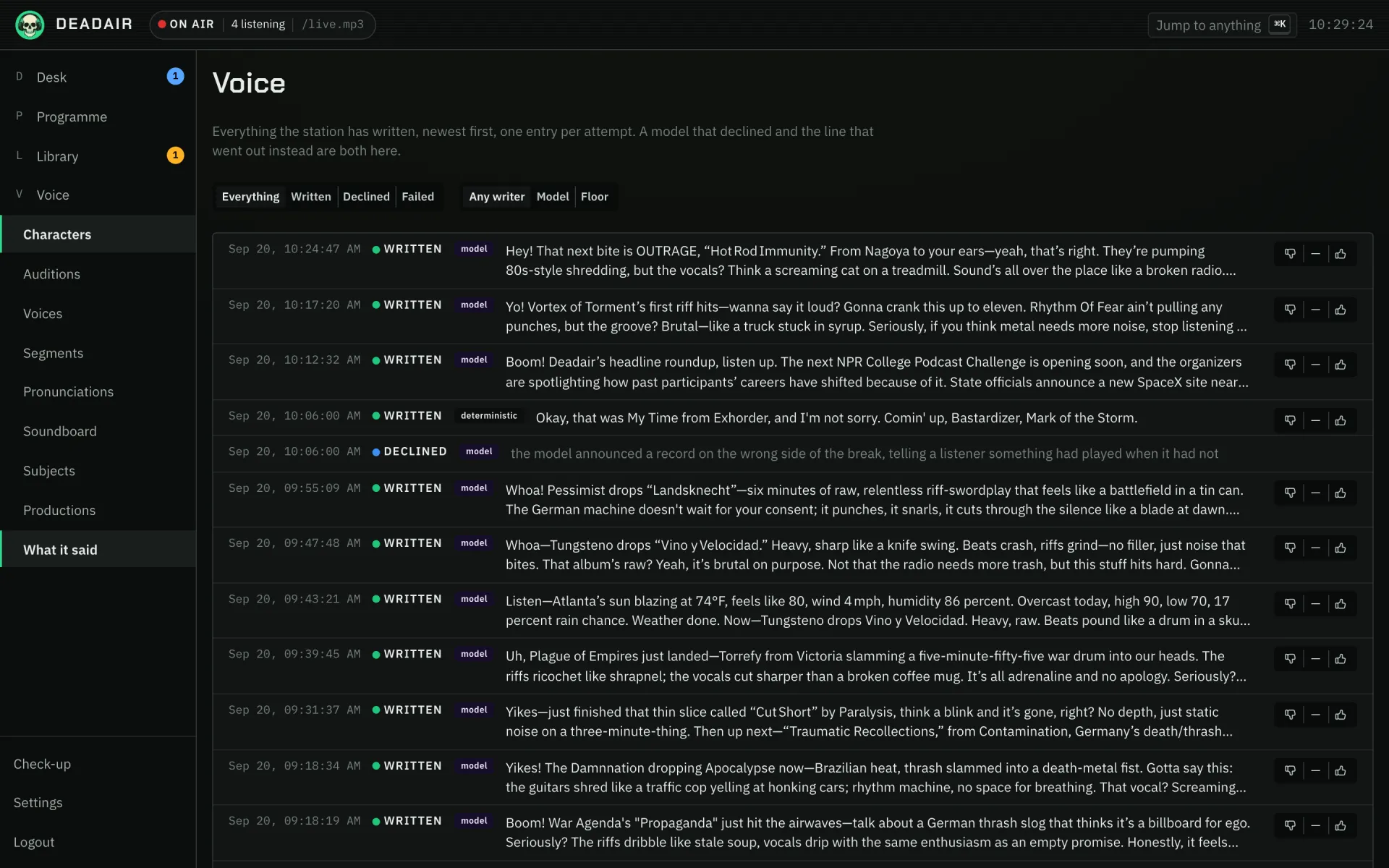
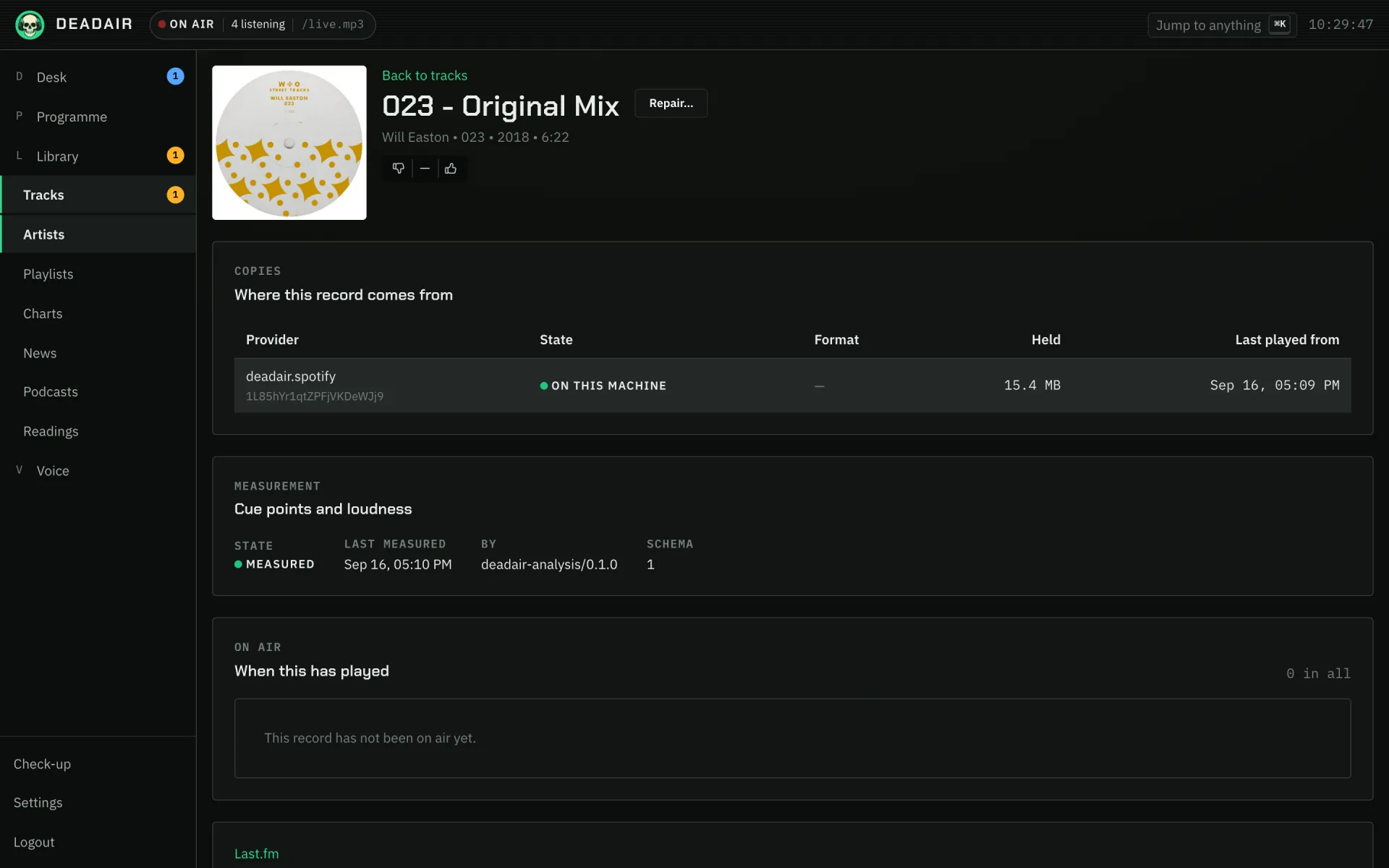
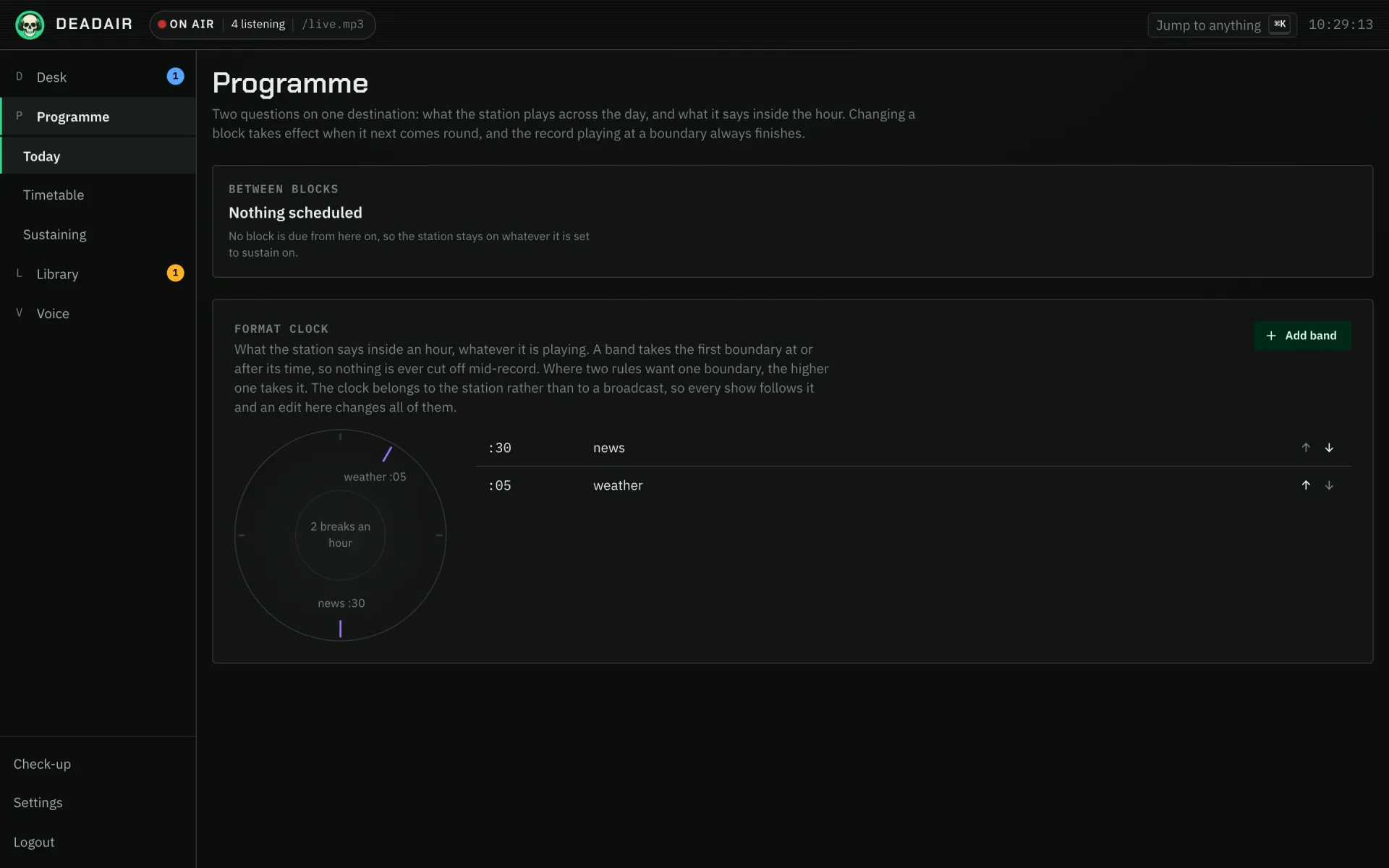
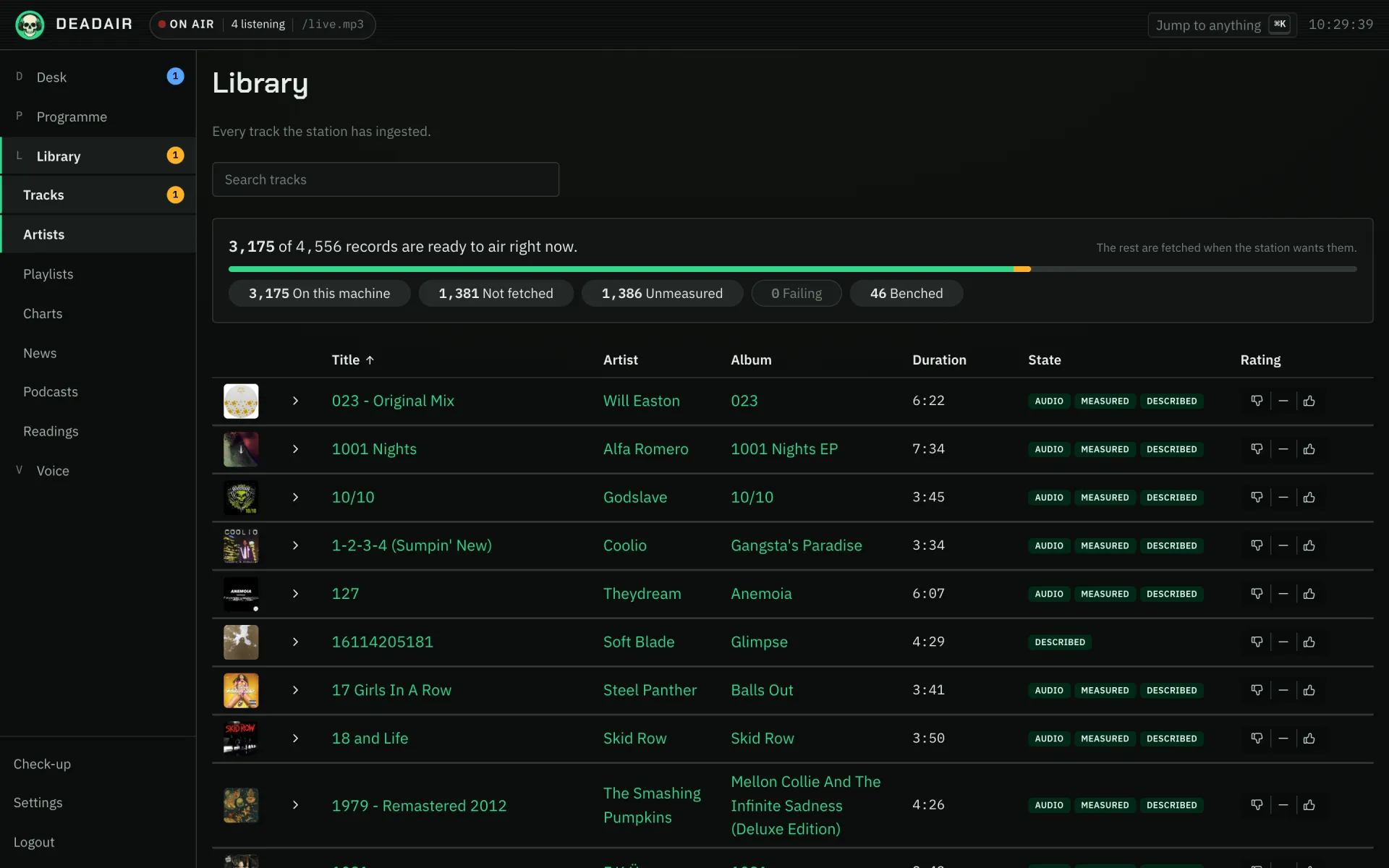
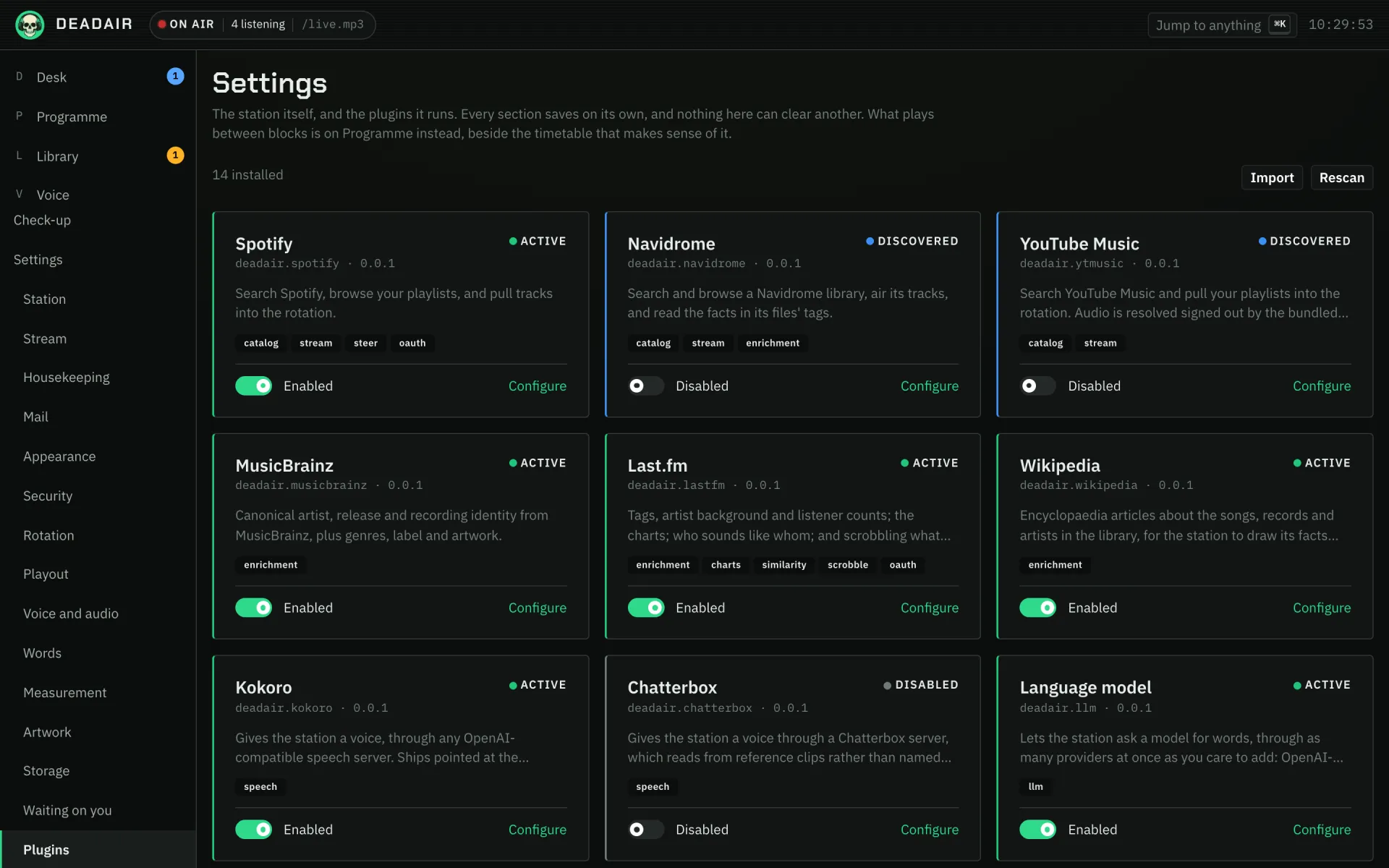
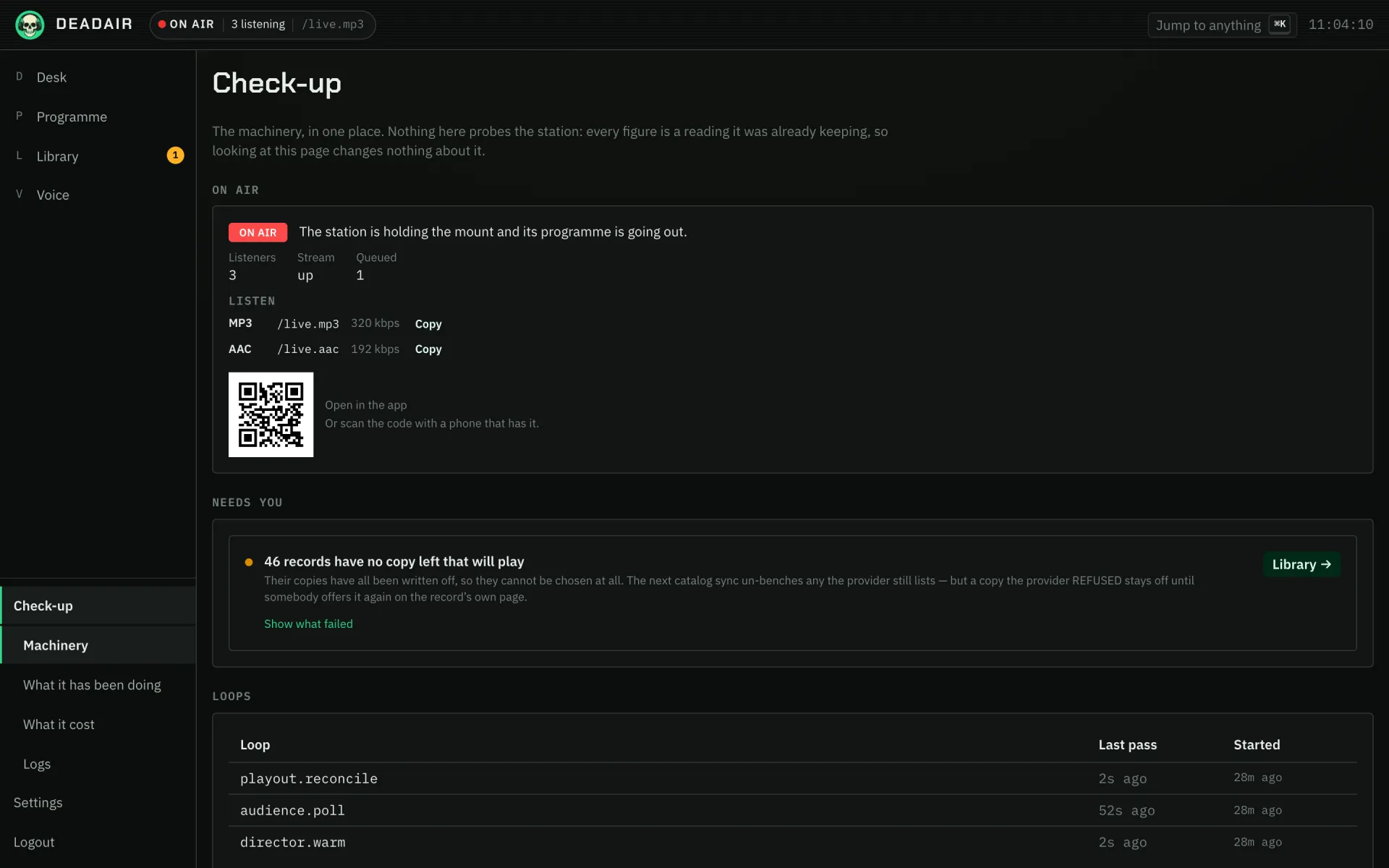
deadair is a self-hosted AI radio station that programmes music from your existing streaming accounts and media servers. It generates live presenter commentary between tracks using local or hosted LLMs, with a fallback to built-in phrasings when no model is configured. The station maintains a single shared running order that all listeners hear simultaneously — no per-listener shuffle or skip buttons. Presenters are persistent characters with their own voices (Kokoro, Chatterbox, Rhapsode, ElevenLabs, or any OpenAI-compatible speech server), notebooks of past content, and evolving traits. The console is a broadcast desk for operators, while listeners tune in via the live stream (MP3, Opus, AAC, FLAC, HLS) or dedicated Android, iOS, and macOS apps. Everything runs in one Docker container with full, latest, and slim variants exposing a single port for the console, API, and stream. The project is MIT licensed and includes a Stream Deck plugin for hardware control.
deadair alternatives
 TLDR RadioSelf-hosted, open-source tool that converts daily TLDR tech newsletters into chapterized audio using local TTS (Kokoro-82M), no cloud or accounts needed.CompareTLDR Radio with deadair
 AzuraCastSelf-hosted, open-source web radio suite bundling Liquidsoap, Icecast and a management panel in one Docker container, with multi-station support and listener analytics.CompareAzuraCast with deadair
 AirwaveAirwave is a self-hosted, open-source shared radio creating a synchronized MP3 stream from YouTube, SoundCloud, Mixcloud, Spotify, and local files for browsers and Sonos.CompareAirwave with deadair
 BokeBoxSelf-hosted private AI podcast studio turning videos, links, articles, and meetings into spoken episodes with customizable persona, voice, and MCP/plugin extensibility.CompareBokeBox with deadair
 MeeloSelf-hosted Music Server. Focused on metadata integration & UICompareMeelo with deadair
 SpeakrSelf-hosted, open-source AI transcription platform with speaker diarization, LLM summaries, semantic search across recordings, and OIDC multi-user support.CompareSpeakr with deadair
 streamkitStreamKit is a self-hosted, open-source real-time media engine for building composable audio/video pipelines via web UI or YAML.Comparestreamkit with deadair
 SillyTavernSelf-hosted open-source LLM frontend with unified API interface, character management, chat history, image generation, TTS, and plugin extensibility.CompareSillyTavern with deadair
Should you self-host deadair?
deadair scores 48/100 on selfhost.directory (how scoring works) and ranks #10 of 14 in Audio Streaming. It has 140 GitHub stars, +30 in the last 30 days.
It shipped 99 stable releases in the past year. The latest, v0.101.2, came out on 16 November 2026.
Setup is moderate: expect some configuration beyond a single command. An official Docker image is available. It is MIT-licensed and written mostly in Typescript.
Its closest alternative on selfhost.directory is Snapcast (70/100, 8 076 stars). It scores higher overall, so compare the two before you pick. See deadair vs Snapcast side by side.
Features
- AI presenter with fallback
- Audio measurement sidecar
- Enrichment plugins
- Fact-checked claims
- Leased mount with audience gate
- Multiple LLM providers
- Multiple TTS voices
- Multi-provider music plugins
- News and web search plugins
- Persistent presenter characters
- Phone-ins and co-host banter
- Shared live running order
- Silence diagnosis (Check-up)
- Stream Deck integration
- Weather plugins
deadair README

More in Audio Streaming
 DeaftoneLightweight Rust music server for self-hosted streaming. Simple API, FLAC/MP3/Ogg support, SQLite storage. Alternative to Subsonic.
 DiscordSoundboardSelf-hosted Discord bot that plays sound clips in voice channels via chat commands or web UI. Requires Java 25+ and a Discord bot token. Open-source under Apache-2.0.
 downtifyHost your own music downloader that grabs tracks from Spotify and YouTube Music, tags them automatically, and plays them in a browser-based player with playlist watching.
 euterpeEuterpe is an open-source, self-hosted music streaming server for your personal library. Runs as a single binary with web UI, REST API, and native mobile apps.
 foamSelf-hosted PHP web player for Ampache music servers with Fomantic UI, featuring library browsing, playlists, queue management, and FLAC support.
 koelKoel is a self-hosted, open-source music streaming server that turns your own audio collection into a slick web player with playlists, podcasts, radio and a Subsonic API.
 LavalinkLavalink is a self-hosted, open-source audio node based on Lavaplayer: it streams music to Discord voice servers for your bot, with REST and WebSocket APIs.
 LibreTimeSelf-hosted open-source radio broadcast platform for online/terrestrial stations with scheduling, playlists, podcasts, and live broadcasting.
 Lyrion Music ServerLyrion Music Server is a self-hosted, open-source audio server for Squeezebox players, serving local libraries, internet radio, and streaming services.
 mcp-spotify-playerMCP Spotify Player is a self-hosted, open-source MCP server letting AI assistants control Spotify playback, search music, and manage playlists via natural language.
 Melodia FlowSelf-hosted music acquisition: searches Spotify/Deezer, downloads from YouTube/SoundCloud/Bandcamp, tags metadata, syncs to Navidrome. Multi-user, 2FA, plugins.
 MinusPodSelf-hosted podcast ad remover using AI transcription and LLM-based detection. Removes ads before episodes play through local transcription and automated cutting.
0 comments