
Self-host budibase
v3.51.0Open-source platform for AI agents, apps and automations
docker run -d -t --name=budibase -p 10000:80 -v /local/path/data:/data --restart unless-stopped budibase/budibase:latest- Stars
- 28 398
- Port
- 80 (HTTP web interface inside the all-in-one container; the Docker CLI example maps it to host port 10000)
budibase/budibase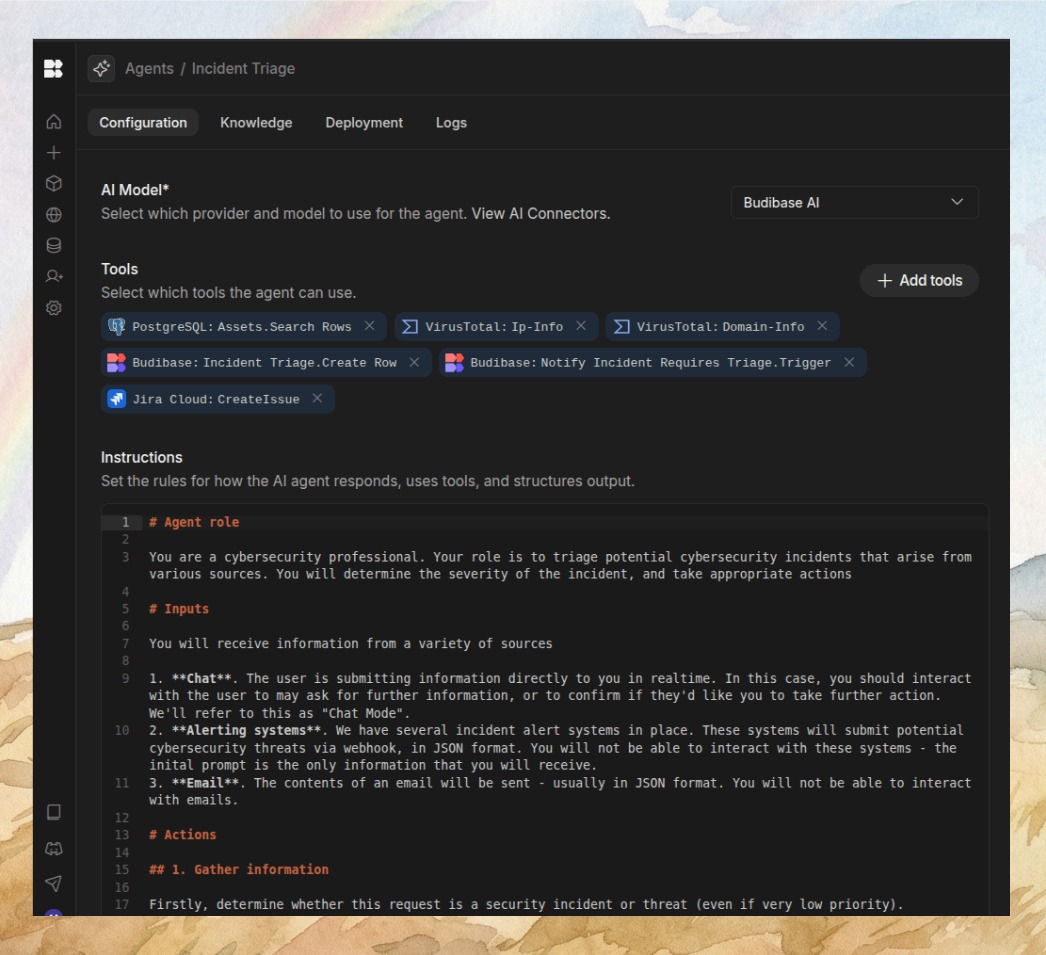
What is budibase?
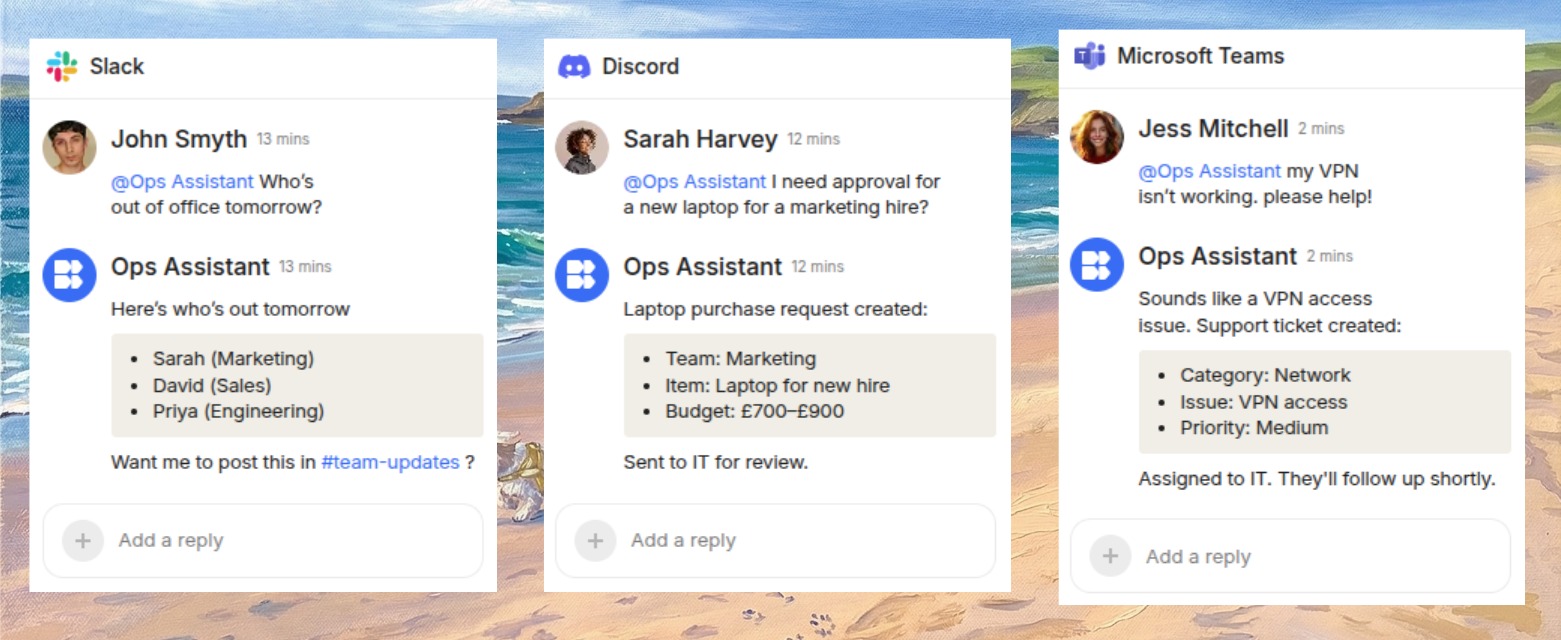
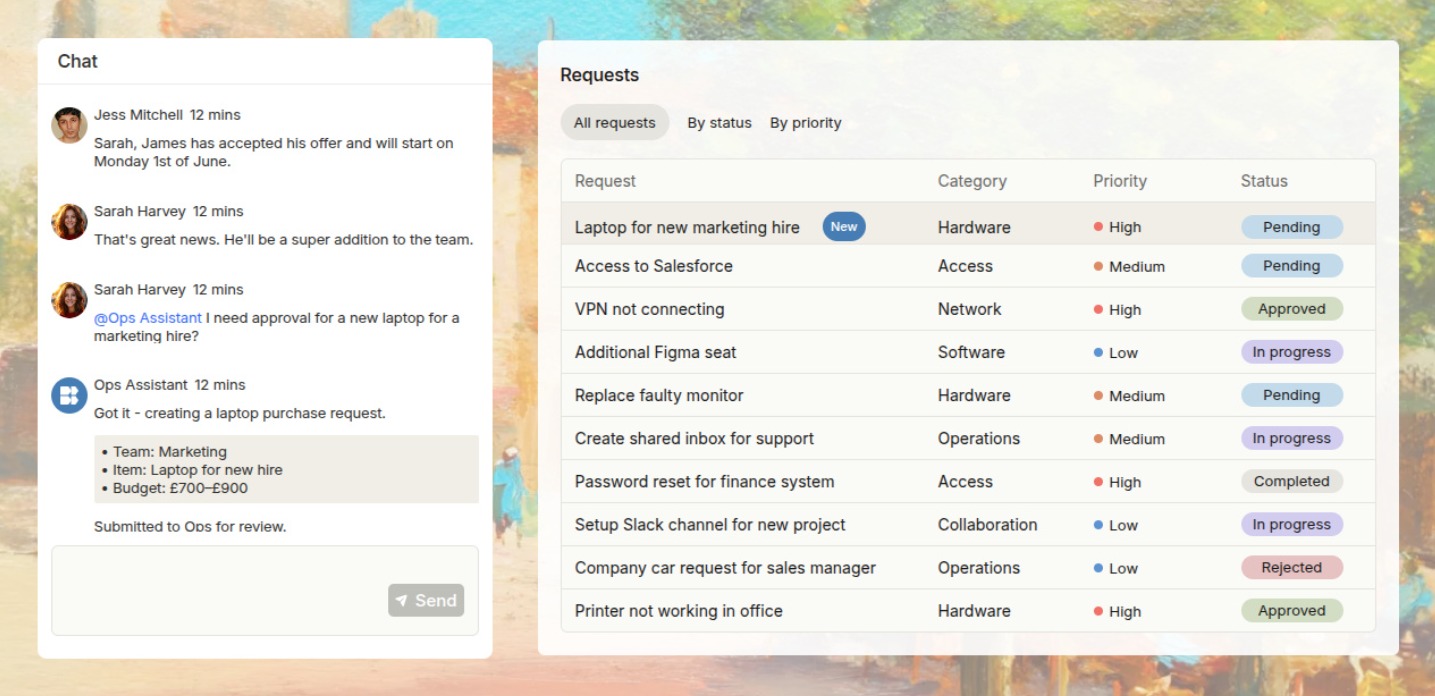
Budibase is a GPL-licensed low-code platform where teams assemble AI agents, internal web apps and backend workflows inside one self-hostable product. Typical usage covers employee requests, approval routing and support triage: an agent reads or writes records, hands work to the right people and replies inside Slack, Discord or Microsoft Teams. Building happens in a visual designer with pre-built components, blocks and bindings; data lives in Budibase DB tables or in internal and external datasources, and JavaScript snippets, custom UI and datasource plugins plus a public REST API cover the extensible edges. Self-hosting is documented through an all-in-one ARM-compatible Docker image that bundles CouchDB, MinIO and Redis, and also via Docker Compose, Kubernetes, Digital Ocean and Portainer, with a managed Budibase Cloud as the alternative. The client and component libraries carry an MPL licence while paid functionality ships under a Business Source License: enforced SSO, user groups, backups, audit logs, environment variables, SCIM provisioning and custom branding belong to the paid tiers, whose Enterprise plan covers self-host and on-premise use with an air-gapped add-on. Per the plan comparison the free open-source edition allows unlimited creators, end users and automations but only one workspace and roughly a day of automation log retention.
budibase alternatives
 nocodbSelf-hosted open-source Airtable alternative that turns any database into a no-code platform with spreadsheet-like interface, supporting PostgreSQL, MySQL, and SQLite.Comparenocodb with budibase
 MindsDBSelf-hosted, open-source agent workspace that automates recurring knowledge work, publishes artifacts to live URLs, and routes across frontier and open models.CompareMindsDB with budibase
 pneumaticworkflowSelf-hosted workflow platform with visual process design, AI template generation, task buckets, and API/Zapier integrations — Apache 2.0 licensed.Comparepneumaticworkflow with budibase
 LobuSelf-hosted open-source workspace giving AI agents shared organizational context and persistent specialists via MCP.CompareLobu with budibase
 MindRoomSelf-hosted AI agent platform with persistent memory, 100+ tool integrations, and Matrix-based chat. Run locally or on your servers with local or cloud models per agent.CompareMindRoom with budibase
 bionic-gptBionic is an open-source, self-hosted agentic AI platform for internal teams to build sovereign workflows with own models and data — deployable on-premise.Comparebionic-gpt with budibase
 oc8oc8 is a self-hosted, open-source platform for orchestrating AI agents that work across business software using the Model Context Protocol with human oversight.Compareoc8 with budibase
 PadPad is a self-hosted, open-source project management tool for developers and AI agents. Single binary with web UI, CLI, and AI skill backed by SQLite or PostgreSQL.ComparePad with budibase
Should you self-host budibase?
budibase scores 74/100 on selfhost.directory (how scoring works) and ranks #2 of 17 in Low Code. It has 28 398 GitHub stars, +70 in the last 30 days.
It shipped 87 stable releases in the past year. The latest, v4.0.0-cloud.1, came out on 10 November 2026. New versions land roughly every 1 days.
Setup is moderate: expect some configuration beyond a single command. An official Docker image is available. It is Other-licensed and written mostly in Typescript.
Its closest alternative on selfhost.directory is ToolJet (78/100, 41 216 stars). It scores higher overall, so compare the two before you pick. See budibase vs ToolJet side by side.
Features
- AI Agents
- Audit LogsPaid Enterprise tier, also available self-hosted.
- Backups and restorePaid tier feature (Premium and Enterprise), including self-hosted Enterprise.
- Bring-your-own AI model credentials
- Built-in data tables
- Chat across messaging channels
- Custom Plugins
- Drag-and-drop UI designer
- External datasource connectors
- Low-code internal app builder
- PDF Export
- Public REST API
- Role-based Access Control
- Single Sign-OnPaid tiers: Premium lists SSO, Business adds enforced SSO and user groups, Enterprise adds Active Directory/SCIM for self-host and on-premise.
- Workflow Automation
budibase README
FAQ
When should I choose cloud instead of self-hosting?
Cloud suits teams wanting managed infrastructure, scalability, collaboration, AI credits and support; self-hosting suits those needing full control of deployment.
Does Budibase offer a free open-source plan?
Yes - the self-hosted open-source edition is free indefinitely, so apps, agents and automations run on your own infrastructure with no licence fees.
Do add-on prices change with yearly vs monthly billing?
Yes, add-ons follow the plan billing toggle and monthly values are the yearly price plus 20%.
Can I add more creators (builders)?
Yes, Premium and Business include a creators add-on at $50 per creator per month on yearly billing.
Can I add more users?
Yes, Pro, Premium and Business plans offer an end-user add-on priced at $5 per user per month on yearly billing.
Why use hard limits instead of overage billing?
Hard limits keep monthly costs predictable, especially for SMEs, so there are no surprise overages.
Are actions soft limits or hard limits?
They are hard monthly limits per plan tier; when you hit the cap you must move to a higher tier to keep running agents and automations.
Why do you price by actions?
Budibase says actions reflect the useful work the platform does, aligning cost with business value rather than seats.
What are "actions" in Budibase pricing?
Actions are the total work agents, apps and automations perform - AI tool calls, automation node executions, row saves and deletes each count. Custom SQL queries and API requests are not counted.
More in Low Code
 canonic-self-hostedSelf-hosted low-code platform to build full-stack apps via Docker Compose with MongoDB and nginx proxy on port 9191, supporting Google OAuth.
 CortezaSelf-hosted, open-source low-code platform for building CRM, workflow and integration apps; an Apache-2.0 alternative to Salesforce that deploys via Docker.
 DropbaseSource-available, self-hosted low-code tool where AI generates Python app code for admin panels and internal tools; runs locally as Docker Compose services.
 FlowForgeConnect, Collect, Build, and Scale with FlowFuse
 FlowFuseSelf-hosted platform for building industrial applications at scale using Node-RED with AI-assisted development, team collaboration, and DevOps pipelines.
 GristA self-hosted, open-source relational spreadsheet with database-style columns, Python formulas, row-level access rules, forms and drag-and-drop dashboards.
 illa-builderSelf-hosted open-source low-code platform for internal tools: dashboards, CRUD apps, admin panels, with database/API connectors and scheduled or webhook automation.
 langflowLangflow is a self-hosted, open-source low-code platform for building AI agents and RAG workflows with a visual drag-and-drop interface.
 LowcoderOpen-source low-code platform for internal tools and customer apps with visual builder, 120+ components, 60+ data sources, and Docker self-hosting.
 LowdefyOpen-source, config-first stack for building internal tools, admin panels and dashboards in YAML, with databases, auth and RBAC built in.
 MagicAn open-source, self-hosted app builder where you describe an app in ordinary English and get its database, API and frontend, plus every endpoint exposed as an MCP tool.
 nocobaseOpen-source, self-hosted no-code environment for assembling internal business systems: AI employees, WYSIWYG data modeling, fine-grained permissions, workflows, plugins.
0 comments